MN Injury Case Watch
Why a Minnesota Court Allowed a Family's Medical-Malpractice Claims to Proceed After a Child's Death
When a family brings a medical-malpractice claim, Minnesota law requires them to support it early with expert reports — and one of the hardest requirements is showing how the alleged error caused the harm. In a recent decision, the Minnesota Court of Appeals held that a family's expert reports met that requirement, reversed the dismissal of their malpractice claims, and sent those claims back to the trial court, without deciding whether the family will ultimately win.
The Facts
What happened
According to the record, late one night in February 2022, a father brought his three-year-old son, D-Angelo Pitchford, to the Olmsted Medical Center (OMC) emergency room in Rochester, in Olmsted County, after the child vomited what looked like “coffee grounds.” The treating physician, Dr. Luke Hunter, examined the child and ordered blood testing and an x-ray. The medical record described a seriously ill child — dehydrated, with abnormal lab values and signs of possible kidney trouble.
The father grew frustrated and distrustful after problems with the blood draw and long waits, and came to believe the staff were not being straight with him. He ultimately decided to leave “against medical advice” (AMA). It is undisputed that Dr. Hunter warned him that leaving could result in the child's death. The medical record reflected that the father electronically signed an AMA form, although he testified that he saw only a blank signature screen. The family took D-Angelo home. A few hours later, D-Angelo was found deceased. An autopsy attributed his death to complications from a paraduodenal hernia.
D-Angelo's grandmother, as trustee for his heirs, sued OMC and Dr. Hunter for medical malpractice and also brought a claim under a federal emergency-care law, EMTALA. To support the malpractice claims, she submitted reports from three medical experts, who opined that hospital staff — as mandated reporters of child neglect — should have reported the situation and involved law enforcement to keep the critically ill child from being removed, and that timely treatment would have saved his life.
The district court dismissed the malpractice claims, concluding the experts had not adequately “outlined the chain of causation” required by Minnesota Statutes section 145.682, and granted summary judgment on the EMTALA claim. The family appealed.
The Decision
What the court held
The Court of Appeals, in an opinion authored by Judge Wheelock, issued a split decision: affirmed in part, reversed in part, and remanded. See Pitchford v. Hunter, No. A25-1548 (Minn. Ct. App. June 15, 2026). This opinion is nonprecedential. It is not binding authority, although it may be cited for persuasive value as permitted by Minn. R. Civ. App. P. 136.01, subd. 1(c). Judge Connolly concurred in part and dissented in part, and would have upheld the dismissal of the malpractice claims. The case came from the Olmsted County District Court.
- Medical-malpractice claims — reversed and remanded. The majority held that the district court demanded too much of the expert reports. Applying the Minnesota Supreme Court's 2024 decision in Rygwall v. ACR Homes, the court explained that section 145.682 is “purely procedural” — it does not require a heightened, hyper-detailed chain of causation. It requires an expert opinion, tied to specific facts in the record, that lets a jury reasonably infer (without speculating) that the provider's conduct caused the harm. Here, the three experts identified the standard of care (report suspected medical neglect and act to protect the child), the alleged failure to meet it, and the medical steps that would have followed. The court held the medical experts were not required to prove exactly how quickly police would have responded, or under what legal authority a hold would have been placed — those questions fall outside a medical expert's expertise, and requiring answers to them would force a plaintiff to prove the entire case at the earliest stage.
- EMTALA claim — affirmed. The court agreed this federal claim failed as a matter of law. EMTALA is a narrow anti-“patient-dumping” statute — it is not a general malpractice remedy. Because OMC offered examination and treatment and warned the father of the risk of death before he refused care and removed the child, the court held its statutory obligation was met, even resolving the “blank screen” dispute in the family's favor.
One expert, Dr. Fortunato, opined that, to a reasonable degree of medical certainty, D-Angelo's condition would not have deteriorated if he had received immediate resuscitation and continuous monitoring within his first one to two hours in the emergency room. The majority found that opinion sufficient to survive dismissal; the court did not find that any particular window was decisive.
Practical Takeaways
What this means for Minnesota injury and wrongful-death claims
For families pursuing medical-malpractice or wrongful-death claims in Minnesota, this decision is a recent example of how courts are applying Rygwall: the expert-affidavit requirement is a screening tool meant to weed out baseless suits, not a trap requiring plaintiffs to prove every link of causation in exhaustive detail before discovery is complete. Expert reports must connect the provider's conduct to the injury with reference to specific facts — but they do not have to answer questions that lie outside medicine or resolve every factual dispute a jury is meant to decide.
The decision also illustrates that different legal theories carry different requirements. A claim that fails under one law (here, the federal EMTALA statute) may still be permitted to proceed as a state-law malpractice claim. That is why careful evaluation of every available avenue can matter so much — and why preserving medical records and expert analysis early can help support a claim.
Related reading from Andrade Law:
- how the expert-affidavit requirement shapes a medical-malpractice claim
- who can bring a wrongful-death claim and what the process involves
- a line-by-line auditor for emergency-room bill codes
- our case note on Evans v. Sunrise East Multifamily, where a missed procedural deadline ended an injury case before it started
- our case note on Pedersen v. Advanced Reproductive Technologies, where an emotional-distress claim failed under Minnesota’s physical-injury rule
- our case note on Mach v. LPG & NH3 Supply, where conflicting testimony about whether a propane-fitting warning was ever passed along sent the causation question back to a Minnesota jury
Case Information
Case information
- Case
- Cynthia Pitchford, as Trustee for the Heirs and Next-of-Kin of D-Angelo Pitchford v. Luke A. Hunter and Olmsted Medical Center
- Docket
- A25-1548
- Court
- Minnesota Court of Appeals
- District court of origin
- Olmsted County District Court (File No. 55-CV-22-7183)
- Filed
- June 15, 2026
- Disposition
- Affirmed in part, reversed in part, and remanded (medical-malpractice claims reinstated and remanded for further proceedings; EMTALA summary judgment affirmed)
- Precedential status
- Nonprecedential (not binding under Minn. R. Civ. App. P. 136.01, subd. 1(c))
- Authoring judge
- Judge Wheelock (Smith, Tracy M., Judge; Connolly, Judge, concurring in part and dissenting in part)
- Official opinion (mncourts.gov)
- OPa251548-061526.pdf
- Mirror (mn.gov Law Library)
- OPa251548-061526.pdf
Your Attorney
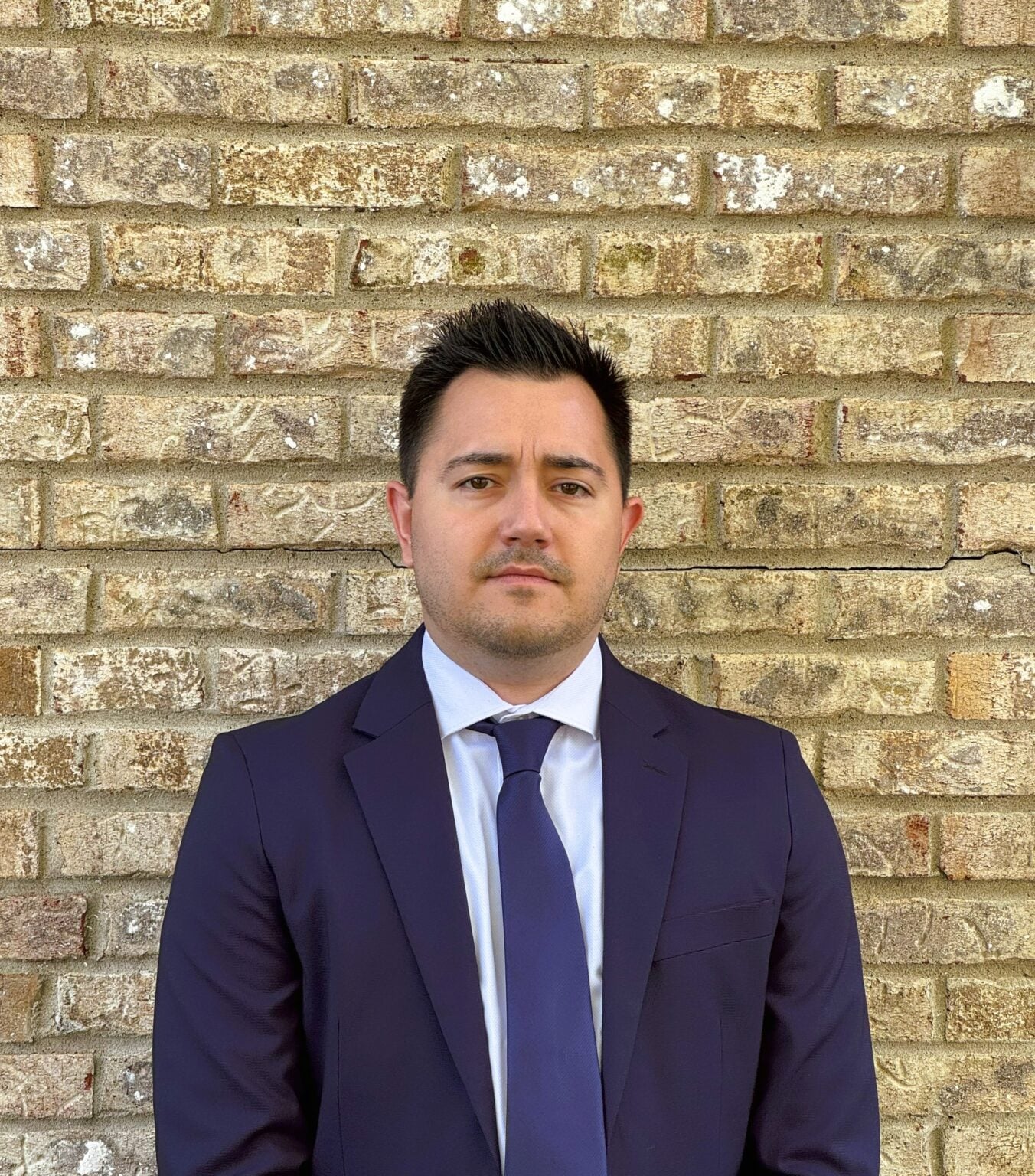
Gabe Andrade
Minnesota Personal Injury Attorney
Gabriel E. Andrade leads Andrade Law with a focus on accountability, careful case-building, and client-first communication. His approach is grounded in the reality that injuries disrupt everything—health, income, family life, and peace of mind—and the legal process should help, not add confusion.
Gabe represents Minnesota families in medical-malpractice and wrongful-death claims, with the care and patience these cases deserve.
If you’re navigating a serious injury, Gabe and the team can help you understand your options and what a fair path forward could look like.
Professional Associations






Talk with us — free consultation
This post discusses Pitchford v. Hunter, No. A25-1548 (Minn. Ct. App. June 15, 2026) (nonprecedential). It is general information, not legal advice, and does not create an attorney-client relationship.