MN Injury Case Watch
When Is a Youth Program Responsible for One Child Hurting Another? A Minnesota Foreseeability Decision
When a child is hurt at a supervised activity, parents often ask whether the organization running it should have prevented the injury. A recent Minnesota Court of Appeals decision addresses that question and shows why the answer turns on a specific legal idea: whether the harm was foreseeable.
The Facts
What happened
On the evening of September 15, 2021, Oakwood Community Church hosted a youth-group meeting attended by seven or eight teenagers, including the parents' 14-year-old child, referred to in the opinion as W.S. Three adults were present: one in the auditorium preparing the lesson, one in an attached kitchen, and a pastor moving between the lobby and the auditorium to welcome students.
Before the meeting began, W.S. and another teenager, C.K., decided to play a game to see who could kick the other harder. The two had known each other for more than a year from attending youth group together. W.S. kicked C.K. in the leg; C.K. kicked back. According to the record, the exchange drew no attention and lasted about 90 seconds. A moment later, as W.S. began to follow C.K. away from some chairs, he fell face-first and struck his head on the cement floor.
W.S.'s mother testified that in the months afterward he experienced headaches, dizziness, agitation, and blurred vision, and that he was later diagnosed with postural orthostatic tachycardia syndrome (POTS), a condition affecting the autonomic nervous system. She testified that she believes the incident caused the POTS. The parents sued the church for negligence and negligent supervision. The church moved for summary judgment, arguing that the injury was not foreseeable, and the district court dismissed the claims.
The Decision
What the court held
The Court of Appeals, in an opinion authored by Judge Bentley, affirmed the dismissal, upholding the Sherburne County District Court. See Schafer v. Oakwood Community Church, No. A25-1568 (Minn. Ct. App. July 13, 2026). This opinion is nonprecedential. It is not binding authority, although it may be cited for persuasive value as permitted by Minn. R. Civ. App. P. 136.01, subd. 1(c).
The case turned on the first element of any negligence claim — the existence of a legal duty of care — which is a question of law for the court. Generally, a person does not have a duty to protect someone from the conduct of a third party. An exception applies when there is a special relationship and the risk of harm is foreseeable. Minnesota courts have recognized a special relationship between a school and its students, and both sides agreed that a youth group's duty to supervise is analogous. So the court applied the school-supervision standard.
Under that standard, an organization “might not be liable for sudden, unanticipated misconduct of fellow students,” but it “is liable for sudden, foreseeable misconduct which probably could have been prevented by the exercise of ordinary care.” Importantly, there is “no requirement of constant supervision of all the movements of pupils at all times,” and supervisors are not required to anticipate “the hundreds of unexpected student acts” that can occur.
Applying that framework, the court concluded the church had no duty to guard against this particular harm:
- Two teenagers spontaneously deciding to kick each other was the kind of “rash student act” that the law does not require adults to anticipate.
- There was no evidence of prior bullying or tension between W.S. and C.K. that should have alerted the adults to provide heightened supervision. To the contrary, the two were longtime acquaintances who attended youth group together.
- With three adults in or near the auditorium and the incident drawing no attention, the court was satisfied that the adults provided the general supervision the law requires.
The court distinguished two cases the parents relied on — Raleigh and Hamilton — because in those cases the organization had advance notice of a specific risk (racial tension in one, a history of bullying between the students in the other). Here, that kind of foreseeability was absent.
Because the parents could not establish a duty of care, the court did not reach the questions of breach or causation. It also did not decide whether the incident caused W.S.'s POTS; the mother's belief about causation was not something the court needed to resolve. Separately, the parents' expert report was excluded by the district court for lack of established qualifications, and the parents did not appeal that ruling, so it played no part in the appeal. The court also upheld the district court's decision not to allow more time for discovery, because the parents' supporting affidavit did not specifically identify what additional evidence they expected to find.
Practical Takeaways
What this means for Minnesota injury claims
Practical points that arise directly from this opinion:
- Foreseeability is often the heart of a supervision claim. Whether an organization had a duty to prevent harm frequently depends on whether the specific danger was reasonably foreseeable — not simply whether an injury occurred.
- Evidence of prior warning signs can matter. Records or testimony showing earlier incidents, complaints, or known tension between the individuals involved may be important to a foreseeability theory and should be investigated.
- Constant, eyes-on supervision is generally not the legal standard. Minnesota law requires reasonable, general supervision, not uninterrupted watching of every child at every moment.
- Expert qualifications and disclosures deserve early attention. An expert opinion may be excluded if the expert's qualifications are not established, and an unappealed exclusion cannot be revisited later.
Related reading from Andrade Law:
- how claims for injuries to children are evaluated and pursued
- how duty of care and foreseeability shape premises-liability claims
- our case note on Eskew v. Luhmann, where an animal-attack claim turned on what the owner knew in advance
- our case note on Campion v. NCAA, where a former player’s head-injury claim against a university failed on the duty theory he presented
Case Information
Case information
- Case
- Joe Schafer and Sarah Schafer, as Parents and Natural Guardians of Minor W.S. v. Oakwood Community Church
- Docket
- A25-1568
- Court
- Minnesota Court of Appeals
- District court of origin
- Sherburne County District Court (File No. 71-CV-24-50)
- Filed
- July 13, 2026
- Disposition
- Affirmed (summary judgment for the church upheld)
- Precedential status
- Nonprecedential (not binding under Minn. R. Civ. App. P. 136.01, subd. 1(c))
- Authoring judge
- Judge Bentley (Ross, Presiding Judge; Cochran, Judge)
- Official opinion (mncourts.gov)
- OPa251568-071326.pdf
- Mirror (mn.gov Law Library)
- OPa251568-071326.pdf
Your Attorney
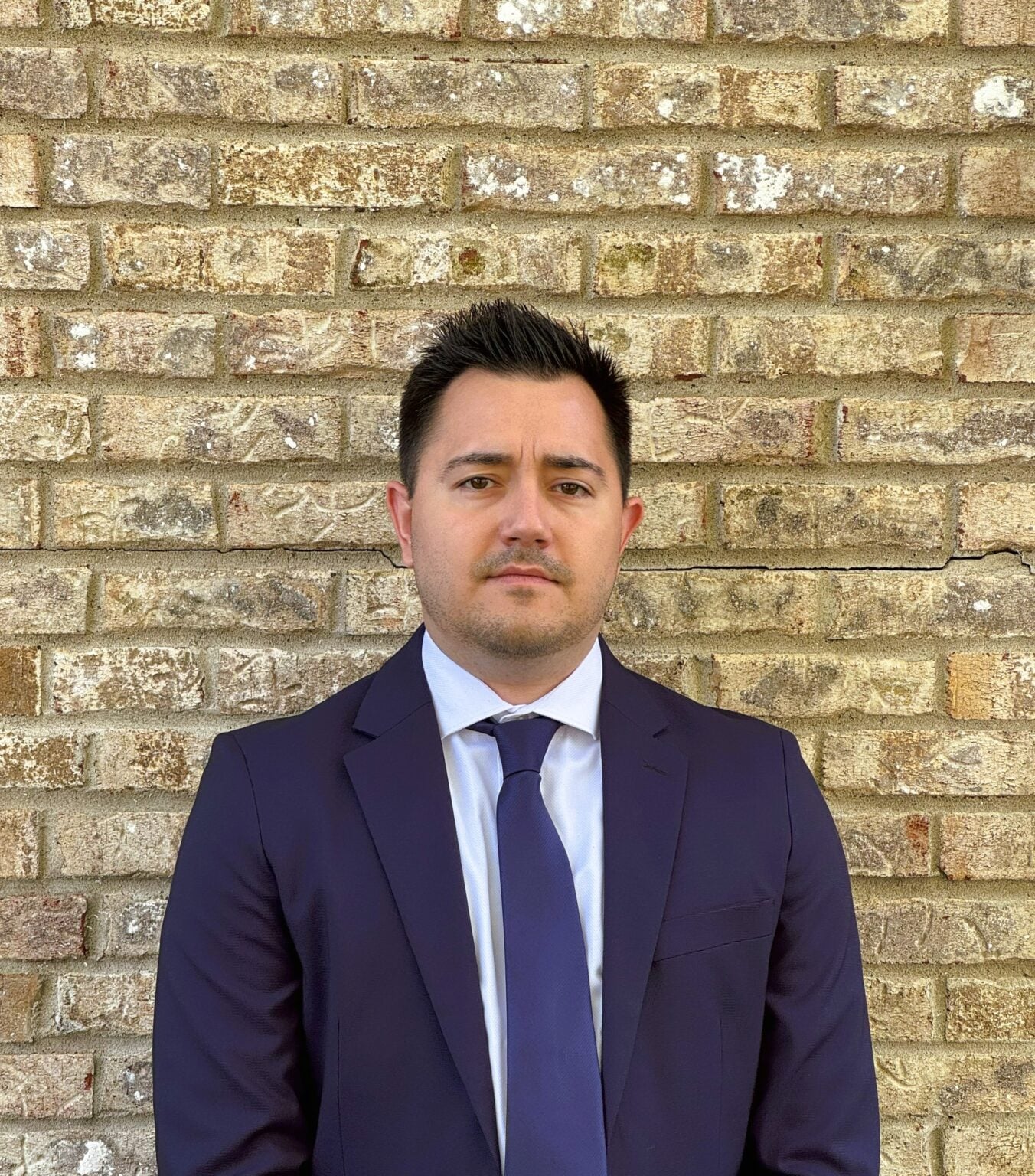
Gabe Andrade
Minnesota Personal Injury Attorney
Gabriel E. Andrade leads Andrade Law with a focus on accountability, careful case-building, and client-first communication. His approach is grounded in the reality that injuries disrupt everything—health, income, family life, and peace of mind—and the legal process should help, not add confusion.
Gabe represents injured Minnesotans in slip-and-fall and premises-liability claims, from the first incident report through resolution.
If you’re navigating a serious injury, Gabe and the team can help you understand your options and what a fair path forward could look like.
Professional Associations






Talk with us — free consultation
This post discusses Schafer v. Oakwood Community Church, No. A25-1568 (Minn. Ct. App. July 13, 2026) (nonprecedential). It is general information, not legal advice, and does not create an attorney-client relationship.