
Downtown East & Government District Injury Guide, Minneapolis
Downtown East packs the Hennepin County Government Center, HCMC, U.S. Bank Stadium, Nicollet Mall, and the skyway system into a few blocks of Minneapolis. The crowds here move on foot, by light rail, and by rideshare, and each of those produces its own kind of injury.
Free Consultation: No fees unless we win your case. Past results do not guarantee future outcomes. This information is for educational purposes only.
Neighborhood Analysis
Where Downtown East Puts People on Foot
The injury patterns in Downtown East follow the buildings. A courthouse, a hospital, a stadium, a transit hub, and a pedestrian mall sit within about three-quarters of a mile of one another, and most of the people moving between them are not in cars:
- Crowds leaving U.S. Bank Stadium cross Chicago Avenue and the blocks around it in waves, against drivers trying to leave at the same moment
- Rideshare pickups stack along curbs that were never designed for them, which puts passengers in live traffic lanes
- The skyway system moves winter foot traffic indoors through privately owned buildings, each with its own maintenance regime
- Light rail shares the street grid at Target Field Station and along its downtown tracks, where pedestrians and turning drivers cross the rails
- Tracked-in slush, polished lobby floors, and refrozen sidewalk seams produce falls from November into April
Hurt in Downtown East?
Downtown scenes reset within the hour. Do this first:
- Get seen at HCMC or your own provider the same day, and keep every discharge paper
- Photograph the curb, crosswalk, skyway floor, or ice patch before it is cleaned, salted, or coned
- Note the building, the block, and the nearest cross street, and get names from anyone who saw it
- Save rideshare receipts and transit fare records; they fix the time and the place
Event Days
U.S. Bank Stadium, Rideshare Zones, and the Crowd Problem
U.S. Bank Stadium at 401 Chicago Ave empties its crowd onto the blocks around it in a short window. Pedestrians spill past signals because the people ahead of them did. Drivers turn through crosswalks that are full. Rideshare drivers stop in travel lanes to find a passenger, and the passenger opens a door into a bike lane or steps between two moving cars to reach it. It is the ordinary physics of a crowd meeting traffic, and it repeats every event night in Minneapolis. When the harm on one of those nights is an assault rather than a collision, the case turns on where a venue’s controlled area ends and the public sidewalk begins.
The light-rail tracks run through the same grid. Target Field Station, about 0.7 miles from the Government Center in a straight line, is the rail hub where the light-rail lines meet downtown, and people cross the rails there on foot while drivers make turns across them. A train has no room to swerve. Questions about who had the signal, where the pedestrian crossed, and what the driver could see get answered by camera footage and signal-phase records, and both have short lives.
A crash in a crowd is rarely one person’s fault alone. Minnesota’s modified comparative fault rule, Minn. Stat. § 604.01, reduces what an injured person recovers by their own share of fault and bars recovery only when that share is greater than the other side’s. Insurers know this, and a pedestrian who stepped off the curb against a signal will hear about it. Minn. Stat. § 169.21 sets out when a driver has to yield to someone in a crosswalk and what the pedestrian owes in return, so the exact position of the crosswalk, the signal phase, and the vehicle decides these cases. Our page on how a pedestrian claim is proven when the driver disputes the crosswalk covers the mechanics.
Winter
Skyways, Nicollet Mall, and the Sidewalk Seam
Winter drives downtown Minneapolis indoors, and the hazards follow. The skyway system is not one place. It is a chain of bridges and corridors threaded through private buildings, and control changes at every door: a different owner, a different cleaning contract, a different security arrangement. Meltwater tracks across polished floors. Thresholds between buildings wear unevenly, and each of those seams is also a seam between two maintenance regimes. When someone falls, the question is who controlled that segment and what their records show.
At street level the seam is Nicollet Mall, about 0.3 miles from the Government Center, where the pedestrian mall meets the skyway exits and the transit stops. Tracked slush from inside meets refrozen melt from outside. It forms in the same places every year, which is the point. A hazard that recurs on schedule is a hazard the responsible party should have anticipated.
Responsibility for a sidewalk or a plaza can belong to a building owner, a property manager, a contractor, or the city of Minneapolis itself, and the answer changes the procedure. Claims against a city, a county, or another political subdivision run through Minn. Stat. § 466, which carries its own notice requirements. That is one reason not to wait on a fall that seemed minor at the time.
Records
HCMC and the Government Center, a Few Blocks Apart
Hennepin Healthcare’s HCMC Red Building at 730 S 8th St (S2 cell 52b332a4) is about a quarter mile from U.S. Bank Stadium and about 0.35 miles from the Hennepin County Government Center, both in a straight line. When someone is seriously hurt in Downtown East, HCMC is often where they are taken, and it is where the first record of the injury gets written: the triage note, the imaging, the discharge instructions. The emergency record written within hours of a crash is the one an insurer reads first. We request the complete chart, not the visit summary, and we check the billing codes against what was done. Our emergency-room bill code auditor shows what that review looks like. I keep a separate guide to finding your way into that building and to the release-of-information desk at HCMC.
The Hennepin County Government Center at 300 S 6th St (S2 cell 52b3329c) is where Google Maps lists the Hennepin County Courthouse and the District Court’s Civil Office. What matters here is geography: the county courthouse stands in the middle of the district where many of these injuries happen.
Andrade Law is a personal injury law firm in Saint Paul, Minnesota. Our Minneapolis office at 10 S 5th St, Suite 800, Minneapolis, MN 55402 sits inside this district, about 0.4 miles from the Government Center in a straight line. If you were hurt anywhere in Downtown East, that is the office that will see you.
The Data
What the Crash Numbers Say About Minneapolis
The state’s Crash Facts report for 2023 counts 17,888 reported crashes in Hennepin County that year, with 6,524 people injured, 47 fatal crashes, and 53 people killed. The report has no city table, so I won’t pretend to know the Minneapolis share.
The City of Minneapolis’s Vision Zero data page adds the shape of the problem. Between 2017 and 2025, about 160 people each year died or were seriously injured in traffic crashes in the city, with a peak of 206 in 2022. Pedestrians take 17% of trips but account for 30% of severe traffic injuries and deaths. For 2024 the city lists speeding as a contributing factor in 80% of fatal crashes. None of those figures is specific to Downtown East. They explain why a district built around foot traffic in the center of Minneapolis, in Hennepin County, at the heart of the Twin Cities, carries the exposure it does.
For the wider view of how we handle injury cases across Minneapolis, start with the city page.
Important Information: This page is general information and is not legal advice. Contacting Andrade Law does not create an attorney-client relationship. Representation begins only after Andrade Law and the client sign a written engagement agreement. Every case depends on its own facts, and no result is guaranteed. The consultation is free.
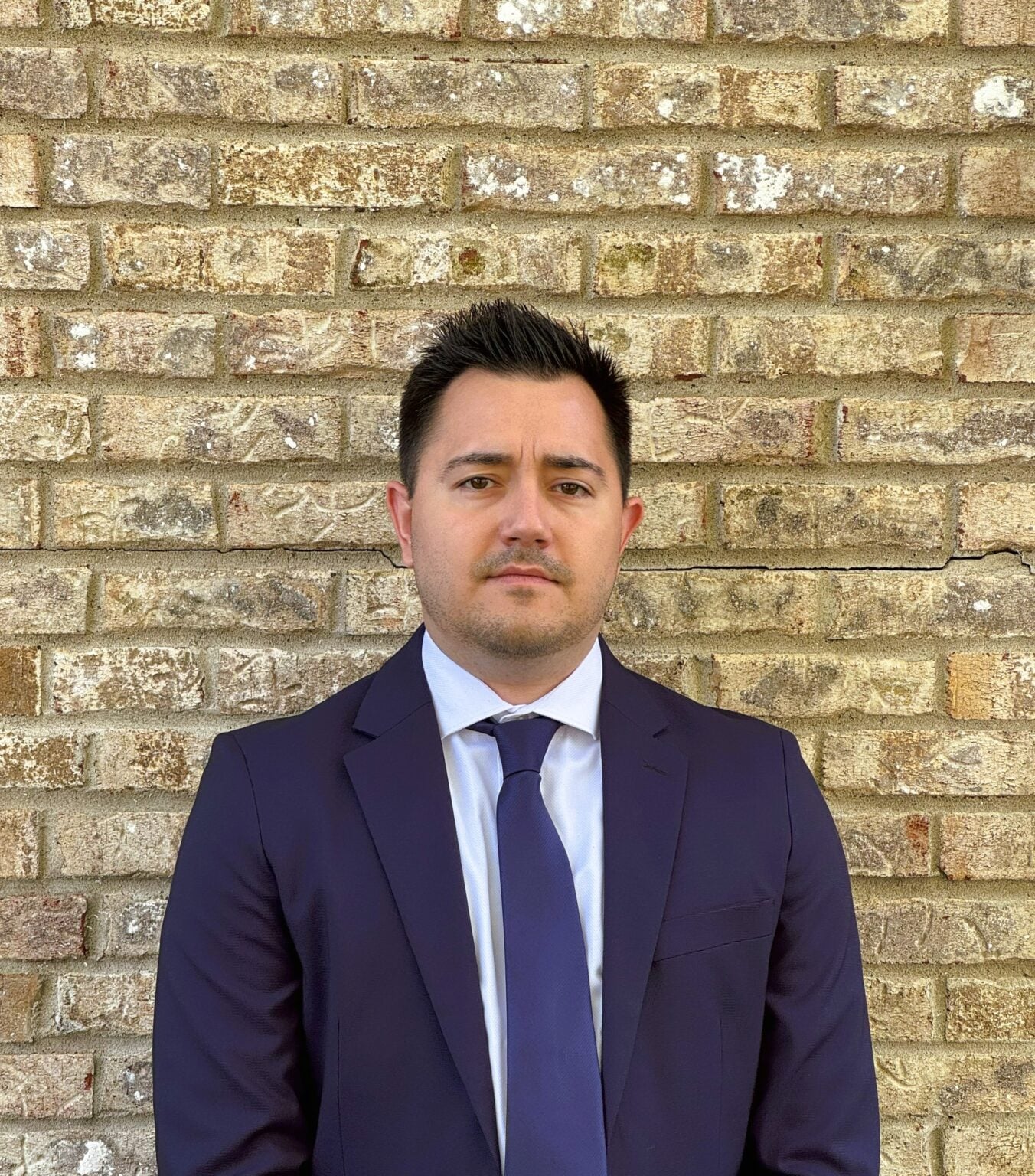
Your Attorney
Gabe Andrade
Minnesota Personal Injury Attorney
Gabriel E. Andrade brings a personal commitment to every case. As a dedicated personal injury attorney serving the Greater Twin Cities, Gabe combines legal expertise with genuine compassion for clients facing difficult times.
Professional Associations