
MN Bar #0402606Se Habla Español5.0 ★ Google Rating

Motorcycle Accident Litigation & Liability

Motorcyclists face unique dangers on Minnesota roads — and unique legal challenges when crashes happen. Andrade Law fights for injured riders from insurance negotiations through trial.

Free Consultation: No fees unless we win your case. Past results do not guarantee future outcomes. This information is for educational purposes only.

Quick Summary

What You Need to Know

Motorcycle accident claims in Minnesota are legally distinct from standard auto claims. Here's what matters most:

  • Motorcycles are excluded from mandatory no-fault coverage — riders must rely on at-fault liability claims
  • Injuries are typically more severe — fractures, road rash, TBI, and spinal trauma are common
  • Liability is often disputed — insurers argue biker fault even when the other driver caused the crash
  • Not wearing a helmet may affect fault allocation — but does not bar recovery for adult riders
  • You generally have 6 years to file — but evidence disappears fast; act early

Time-Sensitive?

Act quickly if:

  • An insurer is pressuring you for a recorded statement before you've seen a doctor
  • The at-fault driver is uninsured or underinsured
  • A commercial truck or rideshare vehicle was involved
  • Scene evidence, skid marks, or dashcam footage may be lost
Call Now: (651) 800-1313
24/7
Availability
$0
Upfront Costs*

How Crashes Happen

Common Causes and Injuries

Most motorcycle crashes in Minnesota are caused by other drivers — not the rider. Understanding what caused your crash directly shapes your legal claim.

Leading Causes of Motorcycle Accidents

  • Distracted driving — phone use, inattention, failure to check mirrors
  • Left-turn collisions — the single most common crash type; cars turning left across a motorcycle's path
  • Failure to yield — at intersections and on-ramps where drivers don't see riders
  • Drunk or impaired driving — criminal conduct that also supports civil punitive damage claims
  • Hazardous road conditions — gravel, potholes, poor signage; may create municipal or MnDOT liability

Common Motorcycle Crash Injuries

  • Fractures and broken bones — arms, legs, collarbone, and ribs from impact
  • Road rash and severe lacerations — deep skin abrasions requiring extensive wound care
  • Neck, spine, and back trauma — herniated discs, spinal cord injuries, chronic pain
  • Traumatic brain injury (TBI) — even with a helmet, high-impact crashes cause serious head trauma
  • Internal bleeding and organ damage — often not apparent at the scene; requires immediate imaging

Note: Andrade Law also represents clients with emotional distress claims following catastrophic motorcycle crashes. Psychological harm from a traumatic collision is a compensable injury.

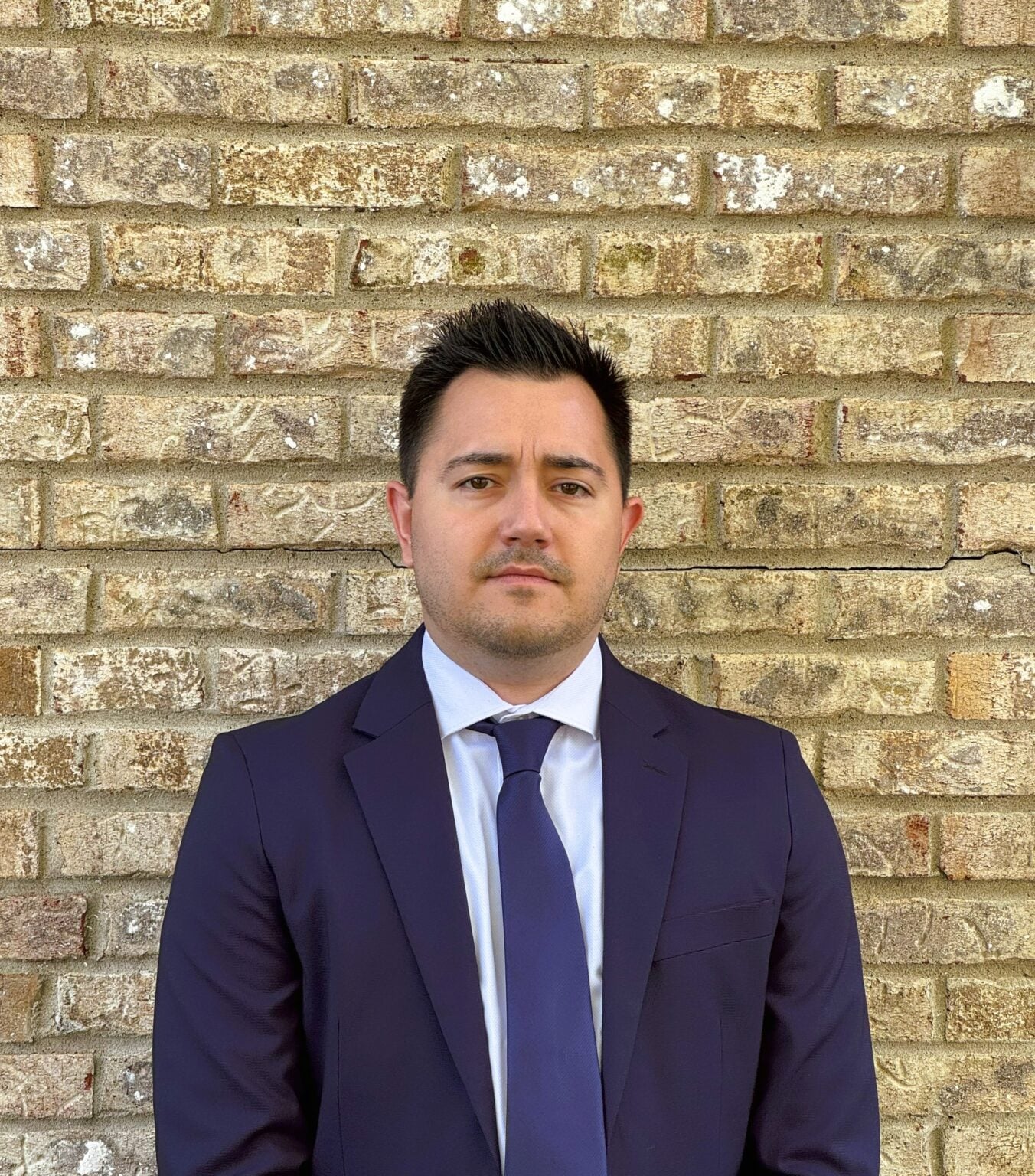
Attorney Gabe Andrade, Minnesota personal injury lawyer

Your Attorney

Gabe Andrade

Minnesota Personal Injury Attorney

Gabriel E. Andrade brings a personal commitment to every case. As a dedicated personal injury attorney serving the Greater Twin Cities, Gabe combines legal expertise with genuine compassion for clients facing difficult times.

MN Bar #0402606
5.0 ★ Google Rating
Se Habla Español
Available 24/7

Professional Associations

Minnesota State Bar Association Ramsey County Bar Association Hennepin County Bar Association Minnesota Hispanic Bar Association Hispanic National Bar Association Minnesota Association for Justice

Responsibility

Who Can Be Held Liable?

Motorcycle accident liability in Minnesota is fault-based. Multiple parties may be responsible, depending on the facts of the crash.

At-Fault Driver

The other driver whose negligence — distracted driving, failure to yield, drunk driving — caused the collision.

Commercial Vehicle / Employer

If a delivery truck, rideshare driver, or commercial vehicle caused the crash, their employer may share liability.

Government Entity

Dangerous road conditions, poor signage, or inadequate maintenance may create a claim against MnDOT or a municipality.

Vehicle or Parts Manufacturer

If a defective motorcycle component — brakes, tires, throttle — contributed to the crash, product liability may apply.

How Andrade Law builds liability: Gabriel E. Andrade investigates police reports, gathers witness statements, coordinates with crash reconstruction experts, and pursues every responsible party — not just the one the insurer points to.

Your Next Steps

What Should You Do After a Motorcycle Accident?

1

Call 911 and get medical help immediately

Even if you feel okay. Adrenaline masks pain. Internal injuries and TBIs may not be apparent at the scene. A police report is also essential evidence.

2

Document the scene and your injuries

Photos of the crash site, vehicle positions, skid marks, road conditions, your gear, and your injuries — before anything is moved or cleaned up.

3

Exchange information with all parties

Driver's license, insurance, license plate, and contact info for the other driver(s) and any witnesses. Do not admit fault at the scene.

4

Keep a recovery journal

Pain levels daily, sleep disruption, missed work, activities you can no longer do, and emotional impact. This record directly supports your damages claim.

5

Contact Andrade Law before speaking to insurers

Do not give a recorded statement to any insurance company — yours or theirs — before speaking with an attorney. What you say can be used to minimize your claim.

Minnesota Insurance Rules

How Insurance Works for Minnesota Motorcyclists

Minnesota is a no-fault insurance state — but that protection does not automatically apply to motorcycles. Riders face a different legal landscape than car accident victims.

Key Insurance Rules for Riders

  • No-fault PIP does not cover motorcycles by default. Riders must purchase optional medical payments coverage or rely on at-fault claims.
  • Uninsured/underinsured motorist (UM/UIM) coverage is critical — many drivers who cause motorcycle crashes carry minimum or no insurance.
  • Helmet non-use may affect comparative fault — Minnesota only requires helmets for riders under 18 or on a permit, but insurers may argue it contributed to head injuries.
  • Drunk driver crashes support both civil liability claims and pursuit of punitive damages.

Statute of limitations: Under Minnesota law, personal injury claims from motorcycle accidents must generally be filed within 6 years of the accident date (Minn. Stat. § 541.05). However, evidence — police reports, dashcam footage, witness memories — degrades quickly. Early legal action protects your claim.

Case Value

What Is Your Motorcycle Accident Case Worth?

No ethical attorney can promise a number without knowing your specific facts. But these are the factors that drive compensation in motorcycle accident cases:

Factors That Affect Compensation

  • Injury severity — fractures, TBI, spinal cord damage, and permanent disability carry higher value
  • Medical expenses — past emergency care, surgery, rehabilitation, and future treatment needs
  • Lost income and earning capacity — missed work, reduced ability to work long-term
  • Motorcycle and property damage — total loss, repair costs, diminished value
  • Pain and suffering — physical pain, emotional distress, anxiety, and loss of enjoyment of life
  • Insurance coverage available — the at-fault driver's liability limits, plus any UM/UIM coverage you carry

Evidence Checklist

  • Police accident report (request a copy immediately)
  • Photos of the crash scene, road conditions, and all vehicles
  • Photos of your injuries — from the scene through recovery
  • Medical records and all bills (ER, specialist, therapy)
  • Witness names and contact information
  • Dashcam, traffic camera, or surveillance footage (request before it's overwritten)
  • Your recovery journal (daily pain, missed work, activities you can no longer do)

Frequently Asked Questions

Can I recover compensation if I wasn't wearing a helmet? +

Minnesota law requires helmets only for riders under 18 or those operating on a learner's permit. Adult riders without a helmet can still recover compensation. However, the insurer may argue that the absence of a helmet contributed to head or facial injuries, potentially reducing your recovery under comparative fault rules. Andrade Law works to counter these arguments with medical evidence and expert testimony.

Does no-fault insurance cover motorcycle accidents? +

No. Under Minnesota law, motorcycles are excluded from the mandatory personal injury protection (PIP) no-fault system. Riders must pursue at-fault liability claims against the other driver's insurance — and should have their own uninsured/underinsured motorist (UM/UIM) coverage as a safety net.

What if the at-fault driver was drunk? +

Drunk driving is a criminal act. In addition to the standard civil liability claim, Andrade Law pursues punitive damages in appropriate cases where the driver's conduct was reckless or willful. A DWI conviction can also strengthen your civil case significantly.

What if the crash involved a commercial truck or delivery vehicle? +

Commercial vehicle crashes are governed by additional federal and state regulations, including FMCSA rules on driver logs and vehicle maintenance. The employer or carrier may be liable alongside the driver. These cases require swift action to preserve electronic logging data and inspection records before they're overwritten.

How long do I have to file a motorcycle accident lawsuit in Minnesota? +

Generally, 6 years from the date of the accident under Minn. Stat. § 541.05. However, some claims — such as those against government entities — have much shorter notice requirements. Act early: evidence becomes harder to gather and witness memories fade with time.

If a commercial truck caused your crash, see our truck accident litigation page for how federal regulations affect your case.

If a drunk driver was involved, learn more about drunk driving accident claims and punitive damages.

Pedestrians and motorcyclists share heightened vulnerability on Minnesota roads. See our vulnerable road user collision and visibility failure claims page.

Two-wheel crash dynamics, shared roadway liability, and comparative fault analysis apply across cycling and riding cases. See our two-wheel roadway collision and shared fault recovery page.

High-speed motorcycle impacts frequently cause closed-head and diffuse axonal brain injuries. See our traumatic brain injury from high-impact collisions page.

Spinal fractures, disc herniations, and paralysis are among the most catastrophic motorcycle crash outcomes. See our spinal fracture and paralysis from motorcycle impact page.

When a motorcycle crash results in death, surviving family members have distinct wrongful death claims under Minnesota law. See our fatal motorcycle collision — family accountability claims page.

For all personal injury claims in the Twin Cities, visit our personal injury services overview.

Schedule a Free Consultation

Andrade Law — Saint Paul. No fees unless we win your case.

This page is general information, not legal advice. Every case depends on its facts. Past results do not guarantee future outcomes.

Reviewed by:
Last updated: