
I-94 / I-35W Commons Crash Risk & Injury Guide in Minneapolis
The Commons is the stretch south of downtown Minneapolis where I-94 and I-35W run together, then split again toward the Lowry Hill Tunnel and the Franklin Avenue ramps. Most afternoons it just crawls. The days it does worse than crawl are what this page is about.
Free Consultation: No fees unless we win your case. Past results do not guarantee future outcomes. This information is for educational purposes only.
Corridor Analysis
Where the Commons Bites
The crash types in the Commons follow its geometry and its seasons:
- Afternoon stop-and-go makes rear-end chains the recurring pattern
- The northbound I-35W to westbound I-94 merge squeezes two streams of drivers into one
- Lane drops and short weaving sections leave no room for a missed mirror check
- Congestion shockwaves send hard braking back through traffic that can't see why
- Winter ice forms on ramps and bridge decks before the mainline
Hurt in the Commons?
In the Commons the scene clears before the next signal cycle. Before it does, get:
- The crash report number, plus which carriageway you were on: the shared I-94/I-35W lanes, the westbound split, or a Franklin ramp
- The sequence of impacts in the chain and where each vehicle came to rest
- Whether a MnDOT camera or a work-zone camera covered your stretch that day
The Geometry
The Merge, the Tunnel, and the Franklin Avenue Ramps
The Commons (S2 cell 52b32d5c) sits just south of downtown Minneapolis, about half a mile in a straight line from Hennepin Healthcare's HCMC Red Building and about 1.2 miles from our Minneapolis office at 10 S 5th St, Suite 800, Minneapolis, MN 55402. Andrade Law is a personal injury law firm in Saint Paul, Minnesota; the Minneapolis office is where I meet the people hurt here. Off the freeway the mechanisms change, and I've laid out how left turns and drivers pulling out of parking produce crashes along Lake Street on that corridor's own page.
First, the merge. Where northbound I-35W traffic joins westbound I-94, two streams of drivers who each believe they hold the lane are forced into one. A merge crash is rarely a mystery about the impact; it's an argument about who had the right to the space. Second, the lane drops, where the drivers in an ending lane need a gap and the drivers beside them decide whether to give one. Third, the tunnel approach. The Lowry Hill Tunnel opened in November 1971, runs 1,496 feet, and carries three lanes each way because its shoulders were converted to travel lanes, so a stall at the portal becomes a chain behind it. MnDOT's Rethinking I-94 Phase 1 report reported the tunnel carrying 175,000 vehicles a day as of 2018. At the south end, the Franklin Avenue ramps feed local traffic in at a speed difference the mainline has to absorb.
The numbers behind the corridor's reputation are old but specific. When the University of Minnesota's traffic observatory established its I-94 laboratory in 2002, it described the interstate as carrying more than 80,000 vehicles a day in each direction and identified a 1.7-mile portion of westbound I-94, from 11th Avenue to the beginning of the Lowry Hill Tunnel, as what MnDOT then called the highest crash area in the state: 4.81 crashes per million vehicle miles, roughly one crash every two days, with congestion for about five hours of every afternoon peak. That describes the corridor's character, not this year's count. For scale, the state's Crash Facts report for 2023 counts 17,888 reported crashes and 6,524 people injured across Hennepin County; it has no city table.
Right now there is one more reason. MnDOT's I-94 / I-394 Minneapolis project runs from July 2025 through fall 2026, a $67 million job covering I-394 from Penn Avenue to N 11th Street and I-94 from Highway 55 (Olson Memorial Highway) to Dunwoody Boulevard, with lane closures in both directions between the Lowry Hill Tunnel and Highway 55. Construction shifts and narrows lanes and moves the merge points Twin Cities commuters have memorized. If your crash happened in a work zone, that day's lane configuration is evidence, and it changes.
Winter
What Winter Does to the Commons
The Franklin Avenue ramps and the bridge decks through the split ice before the mainline does, and the Commons runs too tight in the afternoon for anyone to find out gently. The first driver to lose grip on a ramp hands every driver behind them a shorter stopping distance than they had a second earlier, and one spin turns into a multi-vehicle pileup.
Ice here is predictable, and Minnesota drivers are expected to drive for it; one who carried highway speed onto a frozen ramp has a hard time blaming the road. The weather history, the road-treatment records, and the exact time of the crash settle it, and I request them early.
Fault
How Comparative Fault Gets Argued in a Merge Crash
Merge crashes are argued, not measured. The merging driver says the through lane left no gap. The through driver says the merging driver forced one. Minnesota settles that argument with comparative fault: under Minn. Stat. § 604.01, you can still recover as long as your share of the fault is not greater than that of the person you're recovering from, and what you recover is reduced by your percentage. A driver found 30 percent at fault in a merge collision recovers 70 percent of the damages.
The rules of the road supply the yardsticks. Minn. Stat. § 169.18 sets the duties for lane use and following distance, which is how a rear-end in a shockwave gets sorted, and Minn. Stat. § 169.19 requires a signal before a lane change, which is how a sideswipe at a lane drop gets sorted. Neither statute decides a case by itself; they decide who has to explain. In a chain collision, establishing the order of impacts is most of the work, and it comes from damage patterns, event data, camera footage, and witnesses, not memory. A motorcyclist gets the worst of a lane drop, and I cover the lane change into the mirror a motorcycle sits in separately.
That percentage is where the insurer puts its effort. We've laid out how insurers undervalue a claim when fault is split; the short version is that the first number you hear is an opening position. For how this plays out on a freeway, start with how fault is proven in a multi-vehicle freeway crash.
Questions
Questions I Hear After a Commons Crash
What should I preserve after a crash in the Commons? +
The crash report number, every driver's and witness's information, and photographs of the lane positions before the vehicles move. Then the things that don't wait: if a MnDOT camera may have covered your stretch, send a traffic camera preservation request right away, and if your vehicle or a rideshare logs its own data, our telematics preservation tool explains how to lock it down before it is overwritten. Keep your medical records from the first visit forward.
How long do I have to bring a claim? +
Most negligence-based injury lawsuits in Minnesota fall under the six-year period in Minn. Stat. § 541.05, a catch-all rather than a personal injury deadline; some claims carry shorter periods, and claims against a government entity have separate notice rules. No-fault benefits have their own notice deadline under Minn. Stat. § 65B.55.
Where do people go for care after a crash here? +
Hennepin Healthcare's HCMC Red Building is about half a mile from the Commons core in a straight line, and M Health Fairview UMMC West Bank is about a mile. Go, even if you feel fine. Soft-tissue and head injuries surface days later, and the first record matters.
Important Information: This page is general information and is not legal advice. Contacting Andrade Law does not create an attorney-client relationship. Representation begins only after Andrade Law and the client sign a written engagement agreement. Every case depends on its own facts, and no result is guaranteed. The consultation is free.
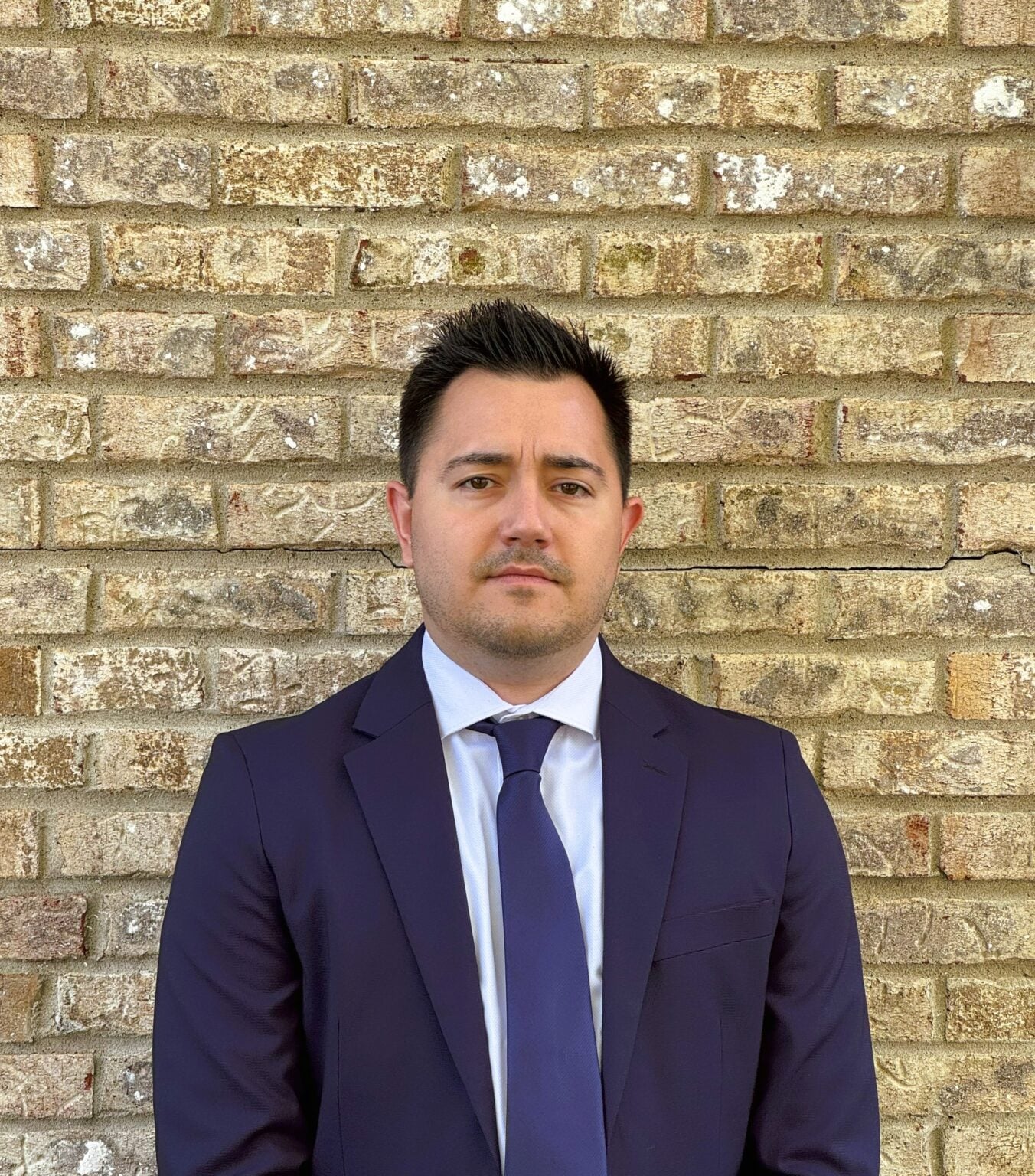
Your Attorney
Gabe Andrade
Minnesota Personal Injury Attorney
Gabriel E. Andrade brings a personal commitment to every case. As a dedicated personal injury attorney serving the Greater Twin Cities, Gabe combines legal expertise with genuine compassion for clients facing difficult times.
Professional Associations