
Auto Accident Litigation in Minnesota
After a car crash in Minnesota, the claims process gets complicated fast — no-fault limits, tort thresholds, insurance adjusters moving quickly. Andrade Law investigates every aspect of your collision, identifies all responsible parties, and handles the fight while you focus on recovery.
Free Consultation: No fees unless we win your case. Past results do not guarantee future outcomes. This information is for educational purposes only.
Quick Summary
What You Need to Know
Minnesota's no-fault system handles initial expenses, but for serious injuries the full legal picture is more complex. Here's what matters most:
- Minnesota is a no-fault state — your own PIP insurance pays first, regardless of who caused the crash
- To sue for pain and suffering, your injuries must cross Minnesota's tort threshold (Minn. Stat. § 65B.51)
- You can still recover even if you were partially at fault — as long as your share does not exceed 50% (Minn. Stat. § 604.01)
- Certain auto accident claims must be filed within under Minn. Stat. § 541.07 — act fast, because evidence disappears quickly
- If the at-fault driver is uninsured or underinsured, your own UM/UIM coverage may fill the gap (Minn. Stat. § 65B.49)
Time-Sensitive?
Contact Andrade Law immediately if:
- An insurance adjuster has already contacted you for a recorded statement
- You received a settlement offer before your treatment is complete
- Dashcam, traffic camera, or surveillance footage may be overwritten soon
- The crash involved a commercial vehicle, government entity, or rideshare driver
Available 24/7 • Free consultation
Minnesota Law
How Minnesota's No-Fault System Works
Minnesota requires all registered vehicle owners to carry personal injury protection (PIP) — commonly called no-fault insurance. Under Minn. Stat. § 65B.49, your own insurer pays your initial medical expenses and a portion of lost wages regardless of who caused the crash. This gets treatment started without a fault dispute holding things up.
No-fault coverage has limits. Standard PIP pays up to $20,000 in medical expenses and $20,000 in wage loss. It does not compensate for pain and suffering, emotional harm, or losses above those caps. Once no-fault benefits are exhausted — or if your injuries meet the tort threshold — you have the right to pursue a third-party claim directly against the at-fault driver.
Minnesota's Tort Threshold (Minn. Stat. § 65B.51)
To step outside the no-fault system and sue for pain and suffering, Minnesota requires that your injury meet at least one of these criteria:
- Medical expenses exceed $4,000 — not counting co-pays, deductibles, or amounts written off by a provider
- Permanent injury — any lasting impairment, including chronic pain, nerve damage, or reduced range of motion
- Permanent disfigurement — scarring, surgical changes, or visible lasting physical alteration
- Disability lasting 60 or more days — inability to perform normal activities for at least two months
For a deeper look at how the no-fault system limits — and opens — your options, see our page on no-fault insurance and PIP dispute claims.
How Crashes Happen
Common Causes of Auto Accidents in Minnesota
Most collisions trace back to identifiable driver conduct or road conditions that a thorough investigation can document. Understanding the cause determines who is liable and what evidence must be preserved. I use our St. Paul crash heatmap to identify high-frequency collision corridors and intersection patterns relevant to your case.
Reckless and Negligent Driving
Under Minn. Stat. § 169.13, reckless or careless driving — including excessive speed, aggressive lane changes, and willful disregard for traffic conditions — constitutes a clear basis for negligence. In cases involving deliberate misconduct, punitive damages may also be available.
Distracted Driving
Minnesota's Hands-Free Law prohibits handheld phone use while driving. Phone records and telematics data can prove distraction at the moment of impact — evidence that directly establishes negligence.
Failure to Yield and Signal
Intersection crashes frequently result from failure to obey traffic signals, improper turns, and failure to signal. Crash reconstruction can establish who had the right of way.
Impaired Driving
Alcohol- and drug-impaired drivers create strong liability exposure. In cases where conduct was willful or wanton, punitive damages may be available beyond compensatory recovery.
Driver Duty to Report (Minn. Stat. § 169.09)
Minnesota drivers involved in injury-producing collisions must report the crash under Minn. Stat. § 169.09. The police report is a foundational piece of evidence — it documents the scene, records initial witness statements, and preserves details that can otherwise disappear within hours. Obtain a copy as early as possible.
Building Your Case
How Andrade Law Investigates Auto Accidents
A car accident claim is only as strong as the evidence behind it. Insurance companies have experienced adjusters and legal teams working on their side immediately after a crash. I build your case methodically — from the scene to settlement or trial.
Secure the evidence record
Obtain the police report, request preservation of dashcam and traffic camera footage, and document road conditions, skid marks, and vehicle positions. Telematics and event data recorder (EDR) information from modern vehicles can establish pre-impact speed and braking behavior — but this data is often overwritten.
Identify all liable parties
Crashes involving commercial vehicles, government roads, rideshare drivers, or multiple vehicles can involve more than one defendant. I investigate employment relationships, vehicle ownership, and road maintenance records to identify every party whose negligence contributed to the collision.
Document the full scope of injury
Compile emergency records, imaging results, surgical reports, specialist notes, and physical therapy documentation. Delayed-onset injuries — particularly whiplash and TBI — require careful medical evidence to connect the crash to your condition. I work with treating physicians and medical specialists to build that connection.
Evaluate all insurance coverage
Minnesota's layered insurance system includes your no-fault PIP, the at-fault driver's liability policy, UM/UIM coverage under Minn. Stat. § 65B.49, and any applicable umbrella or commercial policies. I trace every available coverage source before negotiating.
Negotiate — or take the case to trial
I present a documented demand backed by medical evidence, economic loss calculations, and applicable statutes. If the insurer refuses a fair resolution, the case proceeds to litigation in Ramsey County District Court or the appropriate venue. We are prepared to try cases when settlement doesn't reflect the true value of your claim.
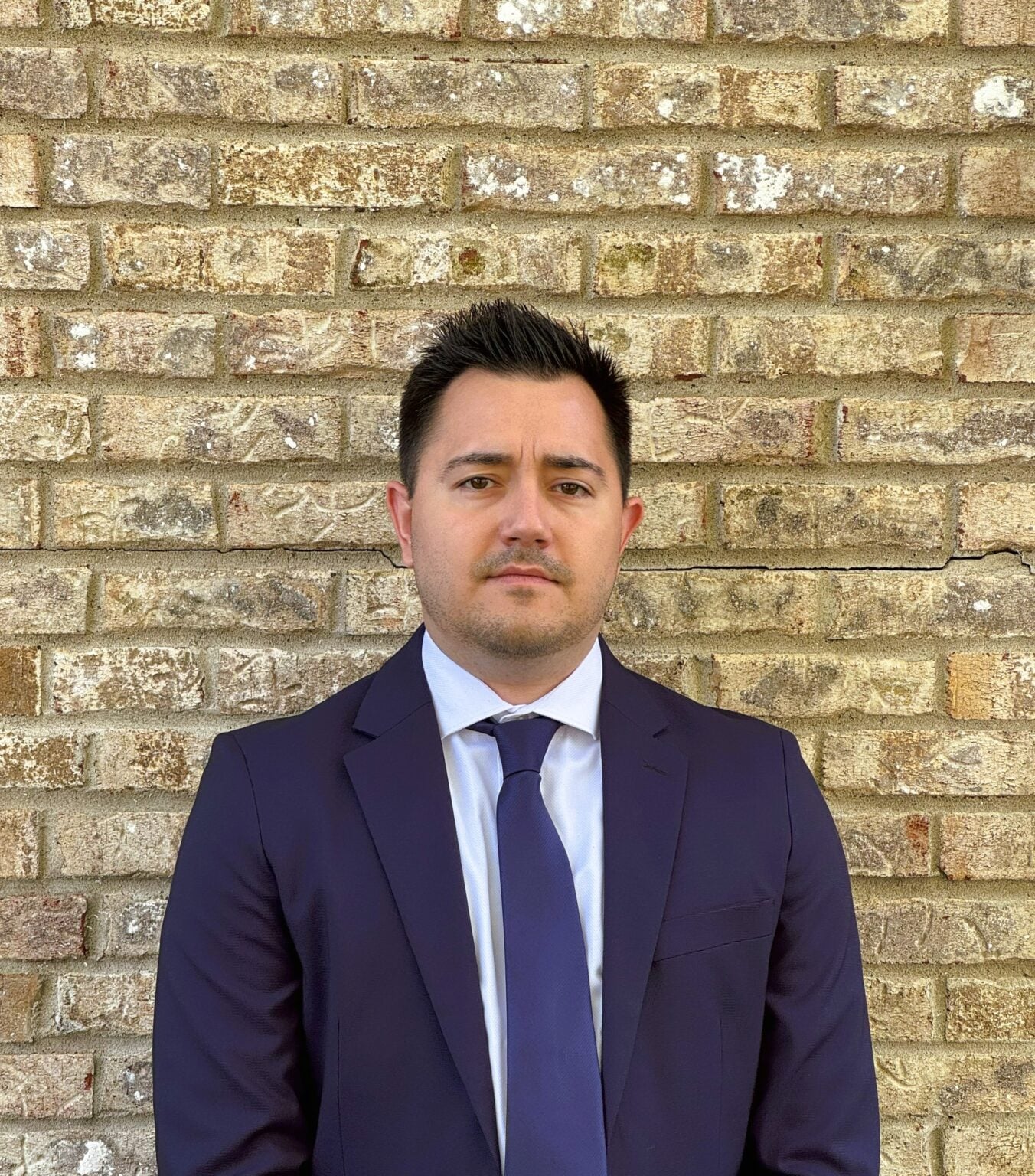
Your Attorney
Gabe Andrade
Minnesota Personal Injury Attorney
Gabriel E. Andrade handles Minnesota auto accident cases from first statement through trial. We work no-fault PIP claims, comparative fault litigation, and underinsured motorist pursuits with the same discipline.
Professional Associations






Fault and Liability
Comparative Fault and Shared Responsibility
Insurance adjusters often argue that you were partly responsible for a crash — even when the evidence clearly points to the other driver. Under Minnesota's comparative fault rule (Minn. Stat. § 604.01), shared fault reduces your recovery but does not eliminate it, as long as your fault does not exceed 50%.
For example: if you are found 20% at fault and your damages total $100,000, your recovery is reduced to $80,000. The insurer's goal is to push your fault percentage as high as possible to minimize their payment. I challenge fault allocations with evidence — accident reconstruction, witness testimony, traffic law analysis, and electronic data.
Uninsured and Underinsured Drivers
If the at-fault driver has no insurance, or their policy limits are insufficient to cover your damages, your own UM/UIM coverage becomes critical. Minn. Stat. § 65B.49 requires Minnesota auto policies to include uninsured motorist coverage. Underinsured motorist (UIM) coverage can bridge the gap between the other driver's limits and your actual losses. I pursue every available coverage layer — including any applicable disputed carrier coverage and bad faith tactics that insurers use to minimize payouts.
Damages
What Compensation Can You Recover?
No ethical attorney can promise a specific outcome without knowing your facts. The following are categories of damages that may be available in a Minnesota auto accident claim.
Medical Expenses
Emergency care, surgery, hospitalization, imaging, physical therapy, specialist consultations, and the projected cost of future treatment. No-fault PIP pays first; the third-party claim covers amounts beyond PIP limits.
Lost Income and Earning Capacity
Wages missed during recovery and any lasting reduction in your ability to earn. For serious injuries, a vocational assessment may quantify the long-term impact on your career and earning potential.
Pain and Suffering
Physical pain, emotional distress, anxiety, PTSD, sleep disruption, and loss of enjoyment of life — all recoverable once the tort threshold is met. See our page on non-economic harm and quality-of-life impact claims for how these damages are valued.
Vehicle and Property Damage
Repair or replacement cost of your vehicle, rental car expenses during repair, and any other personal property damaged in the crash. Property damage claims move on a separate track from injury claims.
Fatal collisions: When a car accident results in death, surviving family members may pursue a wrongful death claim under Minnesota law. See our page on fatal collision accountability claims for how the process works and what survivors can recover.
Specific Collision Types
Specialized Auto Accident Claims
Not every car crash involves the same legal considerations. I handle specific collision patterns that require focused investigation and distinct legal strategy.
Catastrophic and frequently fatal. Head-on crashes on freeways and rural highways often involve wrong-way driving, impaired operators, or sudden lane departures. These cases carry the highest injury severity and the most complex reconstruction needs.
Highway pile-ups and low-speed impacts that still cause serious whiplash and spinal injury. Rear-end cases appear straightforward but insurers frequently dispute injury severity, particularly for soft-tissue and delayed-onset conditions.
Collisions involving Metro Transit's Green and Blue Line trains at intersections and pedestrian crossings. These claims involve a government defendant with specific notice requirements and procedural rules.
For crashes involving commercial trucks, commercial freight vehicle collision liability involves federal regulations and multiple potentially liable parties that change the legal picture significantly.
After a Crash
Steps to Take After a Minnesota Auto Accident
- Call 911 — a police report is essential. Officers document the scene and record initial statements from all parties, creating the evidentiary foundation under Minn. Stat. § 169.09.
- Seek medical care immediately — even if you feel fine. Whiplash, TBI, and internal injuries frequently produce delayed symptoms. A medical record ties injuries to the crash.
- Document the scene — photograph all vehicles, damage, road conditions, skid marks, traffic signals, and your visible injuries.
- Exchange information — name, contact, license plate, insurance carrier, and policy number for every driver involved.
- Do not give a recorded statement — insurance adjusters use recorded statements to lock in your account before all injuries are known. Contact Gabriel E. Andrade first.
- File a no-fault claim promptly — notice of a no-fault claim must generally be filed within of the accident. Missing this deadline can forfeit your PIP benefits.
Local Knowledge
Auto Accident Claims Across the Twin Cities
Andrade Law's office sits in Saint Paul, and I handle collision claims throughout the metro. High-volume crash corridors on I-94, I-35E, and Snelling Avenue generate a significant share of our caseload — alongside intersection crashes on University Avenue and downtown surface streets. Crash patterns, road conditions, and the involvement of government entities vary by location. Local knowledge matters when building your case — from identifying the correct jurisdiction to knowing which agencies maintain the relevant traffic infrastructure.
Common Questions
Frequently Asked Questions
How does Minnesota's no-fault system affect my right to sue? +
Minnesota's no-fault law requires your own PIP insurance to pay initial medical expenses and wage loss regardless of fault. To bring a third-party claim for pain and suffering against the at-fault driver, your injury must meet the tort threshold under Minn. Stat. § 65B.51: medical bills over $4,000, permanent injury, permanent disfigurement, or 60 or more days of disability. Most injuries requiring ongoing treatment meet this threshold.
What if I was partially at fault for the crash? +
Under Minn. Stat. § 604.01, Minnesota uses a modified comparative fault rule. Your recovery is reduced by your percentage of fault, but you are not barred from recovering unless your fault exceeds 50%. Insurance adjusters routinely argue that claimants share blame — sometimes without evidence — to reduce payouts. I challenge fault allocations using physical evidence, traffic law analysis, and accident reconstruction when needed.
How long do I have to file an auto accident lawsuit in Minnesota? +
Minn. Stat. § 541.07 establishes a statute of limitations for certain injury-related actions. Other personal injury claims may have longer filing windows, but critical sub-deadlines — such as the six-month notice window for no-fault PIP claims — can close much sooner. Claims against government entities have even shorter notice periods. Early legal consultation protects every deadline.
The at-fault driver had minimal insurance. What are my options? +
If the at-fault driver's liability limits are insufficient to cover your damages, your own underinsured motorist (UIM) coverage under Minn. Stat. § 65B.49 may provide additional recovery. I review all available policies — including household auto policies and any applicable commercial coverage — to identify every source of compensation. If the driver was entirely uninsured, your uninsured motorist (UM) coverage applies.
Can I still recover if my injuries didn't show up right away? +
Yes. Delayed-onset injuries — whiplash, soft tissue damage, and concussion symptoms — are well-documented medical phenomena. The key is getting prompt medical evaluation and maintaining a consistent treatment record that connects your symptoms to the crash. Insurers will argue that delayed treatment means delayed causation. I work with treating physicians and medical specialists to counter those arguments with clinical evidence.
Recent Minnesota rulings from our Injury Case Watch:
- our case note on Higgins v. Brown, where a $686,000 uninsured-motorist verdict survived appeal
- our case note on Honcik v. American Family, where a driver hurt by an immune government vehicle could still claim uninsured-motorist benefits
- our case note on Kissner v. Farm Bureau, where a $250,000 wage-loss award was erased for lack of income records
Free Auto Accident Consultation
Andrade Law handles collision claims throughout Minnesota. No fees unless we win your case. Hablamos Español.
Andrade Law handles a full range of injury claims across Minnesota — from motor vehicle collisions and premises liability to medical negligence and wrongful death.
This page is general information, not legal advice. Every case depends on its facts. Past results do not guarantee future outcomes.