
Minnesota State Capitol Visitor Guide
The Minnesota State Capitol is the seat of state government at 75 Rev. Dr. Martin Luther King Jr. Boulevard, on a hill just north of downtown Saint Paul. Cass Gilbert's marble-domed statehouse houses the Legislature, the Governor's office, and a courtroom the Minnesota Supreme Court still uses. Admission is free, and the building is open to visitors most days. The laws that govern every Minnesota injury claim are written — and sometimes argued — inside it.
Free Consultation: Andrade Law offers free consultations to all prospective clients. This information is for educational purposes only and is not legal advice.
The Building
What the State Capitol Is
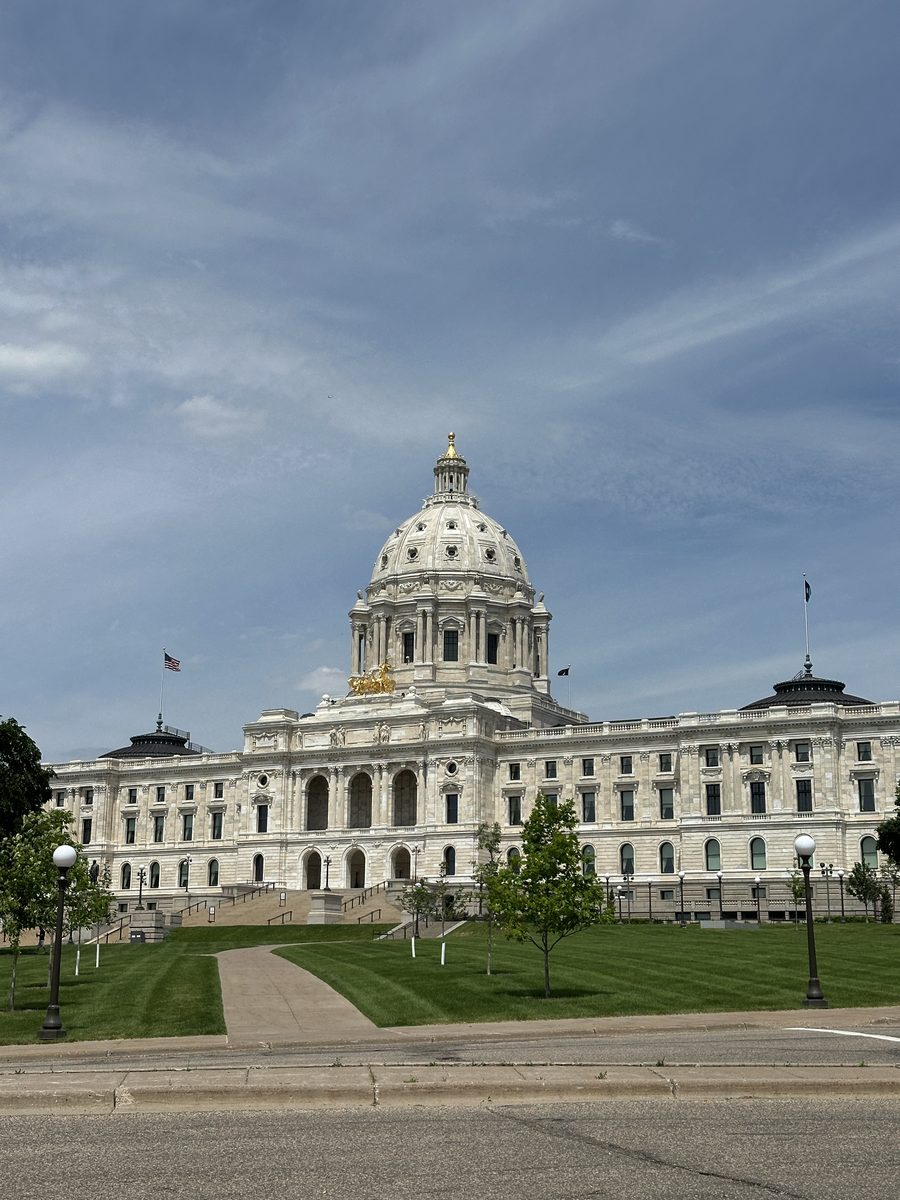
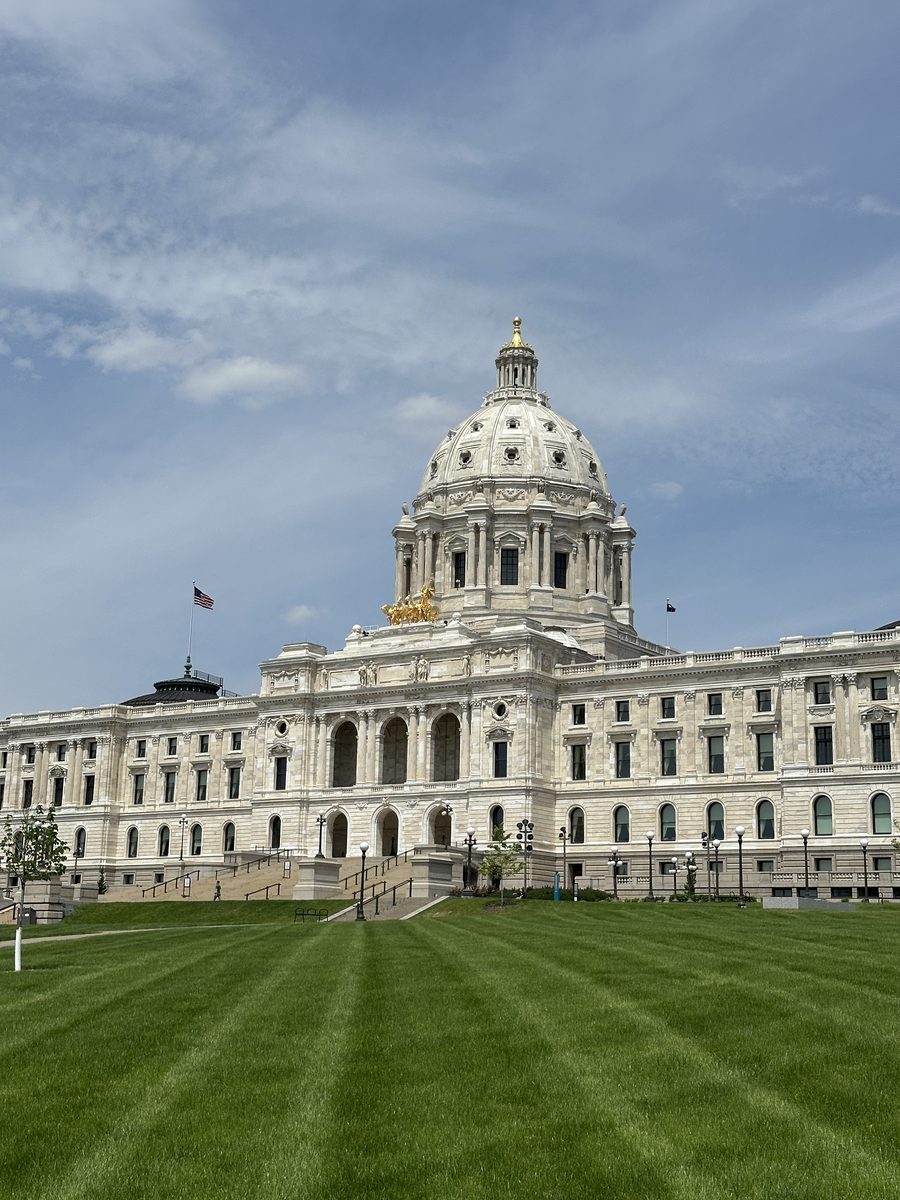
Cass Gilbert designed the Capitol; he went on to design the United States Supreme Court building in Washington. Ground broke on May 6, 1896, and the building opened on January 2, 1905, at a cost of $4.5 million. Its self-supporting dome of Georgia marble spans 89 feet and rises 220 feet to the top of its lantern. Above the south portico stands the gilded Quadriga, "The Progress of the State," by Daniel Chester French and Edward Clark Potter, installed the year after the building opened.
Inside are the Senate and House chambers, the Supreme Court's courtroom, and the Governor's office in Room 130. The building joined the National Register of Historic Places on February 23, 1972. A $310 million restoration, the largest since the building opened, finished in 2017 and re-gilded the Quadriga. The Minnesota Department of Administration operates the building; the Minnesota Historical Society runs the tours.
Visiting
Hours, Tours, and Security Screening
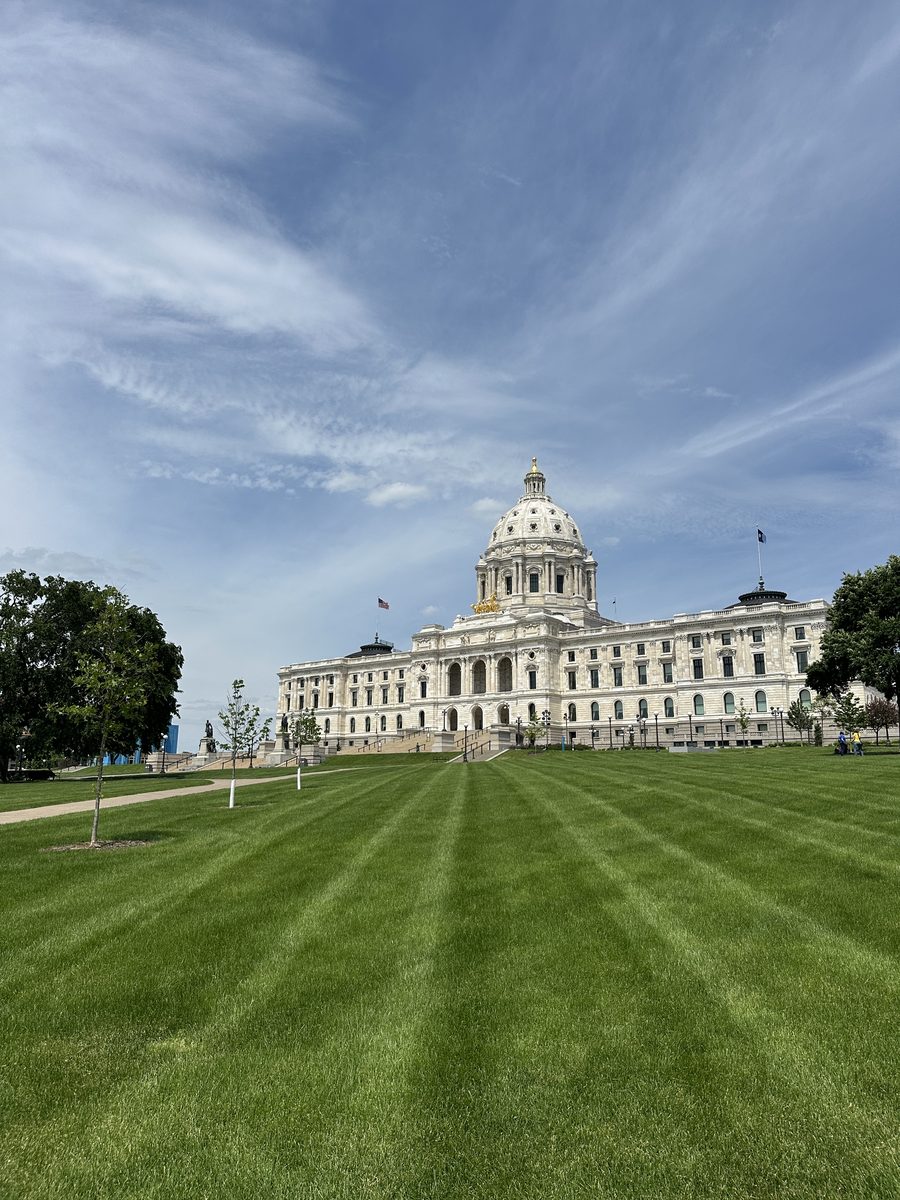
Admission is free. The Legislature's visitor FAQ lists building hours of 8 a.m. to 4:30 p.m. Monday through Friday and 10 a.m. to 3 p.m. on Saturday; the building is closed Sunday. The Minnesota Historical Society leads guided tours with a suggested $5 donation. Tour hours are set separately from building hours, so check both before you make the trip.
As of 2026, every visitor passes through security screening — allow a few extra minutes. The building is wheelchair accessible, with one exception: the roof.
The Courtroom
When the Supreme Court Sits at the Capitol
Most visitors come for the Legislature. I watch this building for its courtroom. The Minnesota Supreme Court hears oral arguments in its second-floor courtroom at the Capitol — sessions there have traditionally fallen in the first week of an argument term, though the court's published calendar governs where and when any case is heard. The courtroom seats roughly 36 observers. When it fills, overflow seating has been offered across the street. My companion guide to the Minnesota Judicial Center covers that building, where the appellate courts otherwise sit.
Why an injury lawyer cares: Supreme Court decisions set the rules every Minnesota injury claim runs under — how fault is divided, what evidence comes in, how long you have to file. Following the decisions that come out of them is part of how I represent injured people in the firm's home city.
Getting There
The Capitol Area
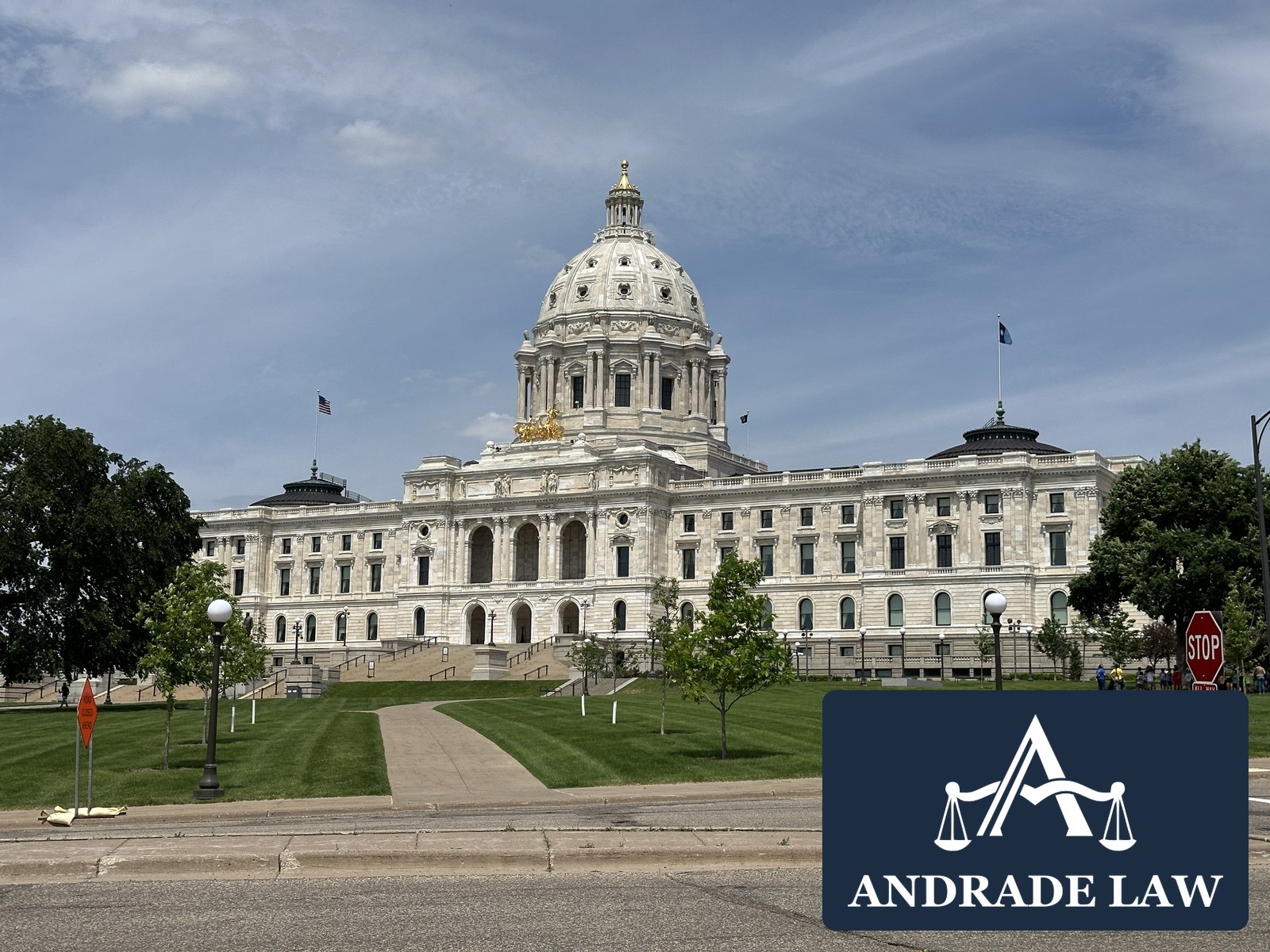
The Capitol stands in Saint Paul's Capitol Area, on a hill just north of the downtown business district, facing south over the Capitol Mall. The Minnesota Judicial Center is a tenth of a mile away.
This building is also a fixed point in how the firm maps its practice: the Capitol is one of the named geographic anchors in the firm's published service-area methodology. For the other Saint Paul buildings an injury case can run through — courthouses, hospitals, government offices — start with the rest of the firm's points-of-interest guides.
Common Questions
State Capitol FAQ
Is the Minnesota State Capitol free to visit? +
Yes — admission is free. The Legislature's visitor FAQ lists building hours of 8 a.m. to 4:30 p.m. Monday through Friday and 10 a.m. to 3 p.m. Saturday, closed Sunday. Verify current hours before you go.
Can I take a guided tour? +
The Minnesota Historical Society leads guided tours of the Capitol, with a suggested donation of $5. Tour hours are set separately from building hours, so check both.
Do I go through security screening? +
Yes. As of 2026, all visitors pass through security screening. Allow a few extra minutes.
Does the Minnesota Supreme Court really hear cases at the Capitol? +
It has — the court keeps a courtroom in the building, seating roughly 36 observers. The court's published argument calendar governs where any argument is held, so check the calendar before making a trip to watch one.
Important Information: Andrade Law is not affiliated with the State of Minnesota, the Minnesota Legislature, the Minnesota Supreme Court, the Minnesota Historical Society, or the Minnesota Department of Administration. Building hours, tour schedules, security procedures, and courtroom locations are set by the Legislature, the courts, and building management and can change without notice — verify current details at leg.mn.gov and mnhs.org before you visit.
This page is general information and is not legal advice. Contacting Andrade Law does not create an attorney-client relationship. Representation begins only after Andrade Law and the client sign a written engagement agreement. Every case depends on its own facts, and no result is guaranteed.