MN Injury Case Watch
A $686,000 Uninsured-Motorist Verdict Held Up on Appeal: What It Shows About Minnesota Injury Trials
When you are hit by an uninsured driver in Minnesota, the fight is often not with the other driver — it is with your own insurance company over how much your injuries are worth. A recent Court of Appeals decision shows one such fight, in which a jury's verdict for the injured driver survived the insurer's six-part effort to win a new trial.
The Facts
What happened
In March 2021, Dwight Higgins was in a collision with an uninsured motorist and suffered neck and back pain. He treated for that pain, including radiofrequency neurotomy injections (a nerve-based pain treatment). Higgins had uninsured-motorist coverage through State Farm.
Because the other driver was uninsured, Higgins pursued a UM claim against his own insurer. State Farm did not dispute that the uninsured driver was at fault; the disagreement was over the amount of damages. Higgins contended the crash directly injured his neck and back, while State Farm argued his pain came from temporary aggravation of preexisting cervical spondylosis — a degenerative spinal condition associated with aging and physical labor.
After a four-day trial in Dakota County, the jury awarded Higgins $686,649.76 in damages. The district court entered judgment for that amount plus roughly $106,000 in costs, disbursements, and prejudgment interest. The award exceeded Higgins's UM policy limit of $250,000. Higgins was also allowed to add a bad-faith claim against State Farm under Minn. Stat. § 604.18, which remains pending in the district court.
State Farm moved for a new trial, raising six separate challenges. The district court denied the motion, and State Farm appealed.
The Decision
What the court held
The Court of Appeals, in an opinion authored by Judge Bond, affirmed the denial of a new trial, upholding the Dakota County District Court. See Higgins v. Brown, No. A25-1570 (Minn. Ct. App. July 13, 2026). This opinion is nonprecedential. It is not binding authority, although it may be cited for persuasive value as permitted by Minn. R. Civ. App. P. 136.01, subd. 1(c). It provides a recent example of how a Minnesota court reviewed a UM trial record.
A new trial is not granted simply because something went imperfectly. The party asking for one must show both that a recognized ground exists and that it was prejudiced — meaning the problem “might reasonably have changed the result.” Applying that standard, the court worked through each of State Farm's six arguments:
- A UM claim is a contract action. The parties agreed, and Minnesota law confirms, that a claim for uninsured-motorist benefits is a breach-of-contract action against your own insurer, not a tort suit. So the trial court's single reference to a “breach of contract case,” and counsel's “a deal is a deal” framing, were not grounds for a new trial.
- A misstatement in closing did not require a new trial. The court agreed that Higgins's attorney erred by telling the jury Higgins underwent “86” painful injection procedures when the undisputed evidence showed only three. But State Farm did not object at the time, and the medical records and testimony repeatedly established the correct number, so the misstatement was not prejudicial.
- An undisclosed expert opinion was properly excluded. State Farm's medical expert had not disclosed, in her report, an opinion that Higgins's smoking significantly contributed to his condition — yet she offered exactly that opinion at a deposition just seven days before trial. The district court's decision to exclude the undisclosed smoking opinion (and to bar State Farm from getting it in through cross-examination) was within its discretion.
- State Farm “opened the door” to a treating doctor's testimony. Although Higgins's treating physician had been excluded, State Farm attacked that doctor's opinion and credibility in its opening statement. The court held that doing so opened the door to letting the doctor explain the basis for his opinion.
- The responding officer testified as a lay witness. The officer described what he perceived at the scene and learned from witnesses. That is permissible lay-opinion testimony and did not require accident-reconstruction expertise. State Farm also forfeited a hearsay objection by not raising it at trial.
- The excess-of-limits challenge was premature. State Farm argued the judgment should not exceed the $250,000 UM limit. The court held that a motion for a new trial was not the right vehicle for that argument, and — importantly — that the challenge was premature because Higgins's bad-faith claim is still pending, so there is not yet a final, appealable judgment.
The decision affirms only the denial of a new trial. It does not resolve whether the judgment may ultimately exceed the policy limit. The court noted that an insurer that breaches its duty of good faith may be liable to its insured beyond the policy limits, and that State Farm can raise its excess-of-limits argument in a later appeal once the bad-faith claim is resolved.
Practical Takeaways
What this means for Minnesota injury claims
Practical points that arise directly from this opinion:
- A UM dispute is usually a case against your own insurer. When the at-fault driver is uninsured, the injured person litigates the value of the claim against their own carrier under the policy.
- Preexisting conditions are a common defense — not an automatic bar. State Farm's theory was that a degenerative condition, not the crash, caused the pain. The jury was entitled to weigh that against the medical evidence and testimony.
- Expert-disclosure rules cut both ways and can be decisive. An opinion that is not properly disclosed in the expert's report may be excluded at trial. Careful, complete expert disclosures often matter.
- Object in the moment. Several of the insurer's arguments failed in part because it did not object at trial or request a curative instruction. Contemporaneous objections generally must be made to preserve an issue.
- Bad-faith exposure can matter when a verdict exceeds coverage. A pending statutory bad-faith claim can affect whether and when an excess judgment is addressed.
Related reading from Andrade Law:
- what goes into proving injuries and damages after a serious crash
- how disputes with your own insurance company over claim value are handled
- our case note on Honcik v. American Family, where uninsured-motorist coverage stepped in after a government driver's immunity ended the tort claim
- our case note on Kissner v. Farm Bureau, where a $250,000 wage-loss award was erased for lack of income records
Case Information
Case information
- Case
- Dwight Higgins v. Andrew Brown; State Farm Mutual Insurance Company
- Docket
- A25-1570
- Court
- Minnesota Court of Appeals
- District court of origin
- Dakota County District Court (File No. 19HA-CV-24-219)
- Filed
- July 13, 2026
- Disposition
- Affirmed (denial of the insurer's motion for a new trial upheld)
- Precedential status
- Nonprecedential (not binding under Minn. R. Civ. App. P. 136.01, subd. 1(c))
- Authoring judge
- Judge Bond (Johnson, Presiding Judge; Jesson, Judge, retired and sitting by appointment)
- Official opinion (mncourts.gov)
- OPa251570-071326.pdf
- Mirror (mn.gov Law Library)
- OPa251570-071326.pdf
Your Attorney
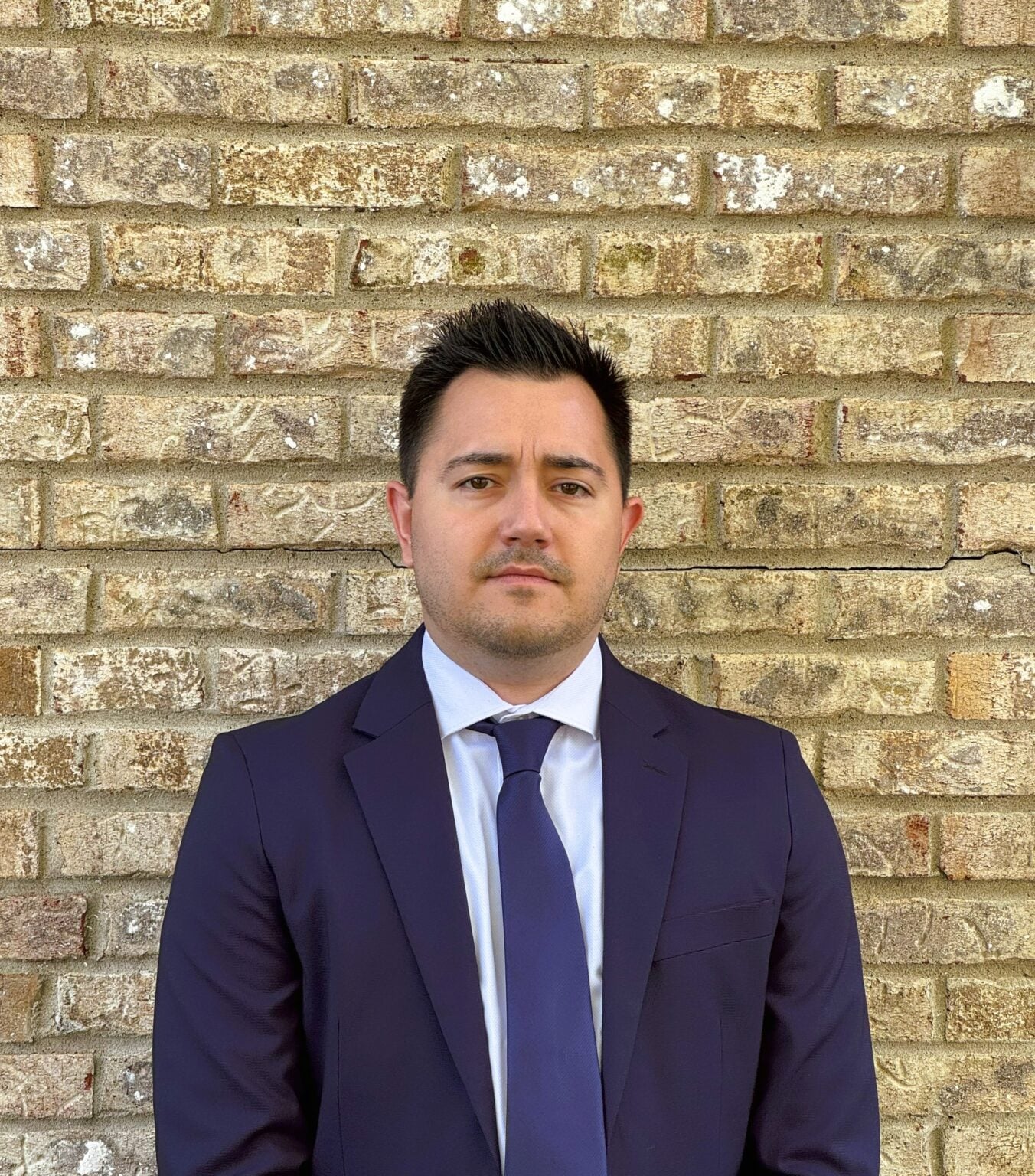
Gabe Andrade
Minnesota Personal Injury Attorney
Gabriel E. Andrade leads Andrade Law with a focus on accountability, careful case-building, and client-first communication. His approach is grounded in the reality that injuries disrupt everything—health, income, family life, and peace of mind—and the legal process should help, not add confusion.
Gabe represents injured Minnesotans in car, truck, and motorcycle crash claims, including the insurance disputes that follow them.
If you’re navigating a serious injury, Gabe and the team can help you understand your options and what a fair path forward could look like.
Professional Associations






Talk with us — free consultation
This post discusses Higgins v. Brown, No. A25-1570 (Minn. Ct. App. July 13, 2026) (nonprecedential). It is general information, not legal advice, and does not create an attorney-client relationship.