MN Injury Case Watch
Why Suing a Minnesota Company Did Not Keep This Injury Case in Minnesota Courts
A company alleged to be headquartered in Saint Paul can still ask a Minnesota court to send a case somewhere else. A recent Minnesota Court of Appeals decision shows how much more than a corporate address it takes to keep a lawsuit in a Minnesota courtroom when the injury, the facility, and the identified fact witnesses are centered in another state.
The Facts
What happened
The Emily Program, P.C. (TEP) provides in-patient and residential treatment for individuals with eating disorders. The opinion states that while Ivy Rose Miller was participating in a residential treatment program at a TEP facility in Columbus, Ohio, in 2024, she was sexually abused by a behavioral health technician, Amanda Stetzer. A footnote to the opinion states that Stetzer was convicted of offenses relating to these allegations and was sentenced to four years in prison. Stetzer was not a party to this lawsuit.
In April 2025, Miller served TEP with a summons, complaint, and jury-trial demand asserting vicarious liability and negligence. She then filed the complaint in district court in Ramsey County, Minnesota.
The complaint alleged that TEP is a professional corporation incorporated under Minnesota law with its principal place of business and executive offices in St. Paul, and that TEP “sets, establishes, oversees, and administers the corporate policies, procedures and decisions for safety, treatment, employee hiring, employee training, employee oversight and supervision” for its facilities, including the Columbus facility. It pointed to TEP's website statement that residential clients receive “around-the-clock care and supervision,” and to client paperwork promising the right to be free from maltreatment, abuse, or neglect, along with facility policies barring employees from texting or emailing patients and barring illegal drugs from the facility.
Miller alleged that Stetzer engaged in conduct intended to entice or coerce her into sexual activity, that Stetzer let her use a personal cell phone during prohibited times and supplied her with vape pens and marijuana, and that Stetzer sent her unsolicited and sexually explicit messages. She alleged that TEP had notice because the facility had surveillance cameras in common areas and outside private rooms, because Stetzer had previously been caught violating facility rules, and because other patients or staff had observed Stetzer's conduct and reported it to management. On the negligence count, she alleged TEP was aware or should have been aware that Stetzer was unfit for the position and failed to warn her, protect her, or control Stetzer.
In June 2025, TEP moved to dismiss the complaint on forum-non-conveniens grounds — the doctrine that lets a court with jurisdiction decline to hear a case that would be more conveniently tried elsewhere. Miller opposed the motion and filed five exhibits, including TEP client paperwork, a certificate of authority issued to TEP by the Minnesota Secretary of State, and paperwork authorizing TEP to do business in Ohio. She alternatively asked the district court to stay the motion so the parties could conduct forum-non-conveniens discovery. TEP responded with a memorandum and a copy of its license to operate a residential facility in Ohio.
After a hearing, the district court granted the motion and dismissed the complaint. It found Ohio to be an available and adequate alternative forum, then weighed the four private-interest and five public-interest factors. It found that every factor favored dismissal except court congestion, which it found neutral. In its concluding paragraph, the district court stated that Miller “should not be given deference” because Ohio “imposes a damages cap on non-economic damages,” that this “contradicts with the public interest against forum shopping,” and that Minnesota's lack of a damages cap “seems to be the only reason why [Miller] chose Minnesota as the forum, which is not encouraged.” The district court did not address Miller's discovery request.
The Decision
What the court held
The Minnesota Court of Appeals affirmed the dismissal, in an opinion authored by Judge Elizabeth G. Bentley (Bentley, Presiding Judge; Ross, Judge; and Segal, Judge, a retired judge of the Minnesota Court of Appeals serving by appointment). See Miller v. The Emily Program, P.C., No. A26-0235 (Minn. Ct. App. Aug. 31, 2026). This opinion is nonprecedential. It is not binding authority, although it may be cited for persuasive value as permitted by Minn. R. Civ. App. P. 136.01, subd. 1(c).
The standard of review shaped the entire appeal. Appellate courts give “substantial deference” to a district court's forum-non-conveniens determination and reverse only for an abuse of discretion, which in this context means an erroneous legal conclusion or a clearly erroneous factual conclusion. Under Paulownia Plantations de Panama Corp. v. Rajamannan, the analysis has two steps: first, the court must establish that an available and adequate alternative forum exists; second, it weighs the private- and public-interest factors of both forums. There is ordinarily a strong presumption in favor of the plaintiff's choice of forum, and the defendant bears the burden of rebutting it.
The first step — whether Ohio was an available and adequate forum — was not at issue on appeal, so the Court of Appeals did not review it. Miller raised three arguments, and the court rejected each.
The district court applied the presumption, even without saying so first
Miller argued that the district court never applied the presumption favoring her choice of forum and improperly treated forum shopping as a factor, pointing to the order's concluding paragraph.
The court was not persuaded. In characterizing the record, appellate courts “honor substance over form,” and “magic words” are not required to conclude that a district court made a legally appropriate determination when that determination can be inferred from its actions. Reading the order in sequence, the district court laid out the two-part Paulownia test, applied it, and found the private factors favored dismissal because the sources of proof and witnesses were in Ohio, because requiring those witnesses to travel to Minnesota for depositions or trial would be costly and difficult, because Stetzer's testimony would be difficult to procure while she is incarcerated, and because the premises are in Columbus. It found four public-interest factors favored dismissal and that court congestion was neutral. Only after all of that did the district court state that Miller “should not be given deference” — which the Court of Appeals understood to mean that the presumption in favor of her choice of forum had been rebutted.
On forum shopping, Miller acknowledged that the practice is disfavored in Minnesota but argued the district court should not have considered it within the forum-non-conveniens analysis. The court held that neither reference was an abuse of discretion: Miller identified no caselaw holding that forum shopping is off-limits in this analysis, and the court was aware of none. The public-interest factors require a district court to consider conflict-of-laws issues, and forum shopping is a factor a court may consider in a conflict-of-laws inquiry under Hague v. Allstate Insurance Co. The district court's statement that forum shopping is discouraged accurately described Minnesota law under Reed v. University of North Dakota.
The holding here is narrow. The Court of Appeals did not independently find that Miller chose Minnesota to avoid Ohio's noneconomic-damages cap. It held that the district court's consideration of forum shopping — including its cap-related discussion — did not constitute an abuse of discretion, and that the order, read as a whole, applied the correct legal framework.
The findings minimizing Minnesota's connection were not clearly erroneous
Miller challenged three findings: that “all the allegations” and “all potential witnesses” were Ohio-based, and that there was “no connection to Minnesota, but for the fact that [TEP] is a Minnesota corporation.” Findings of fact are not set aside unless clearly erroneous under Minn. R. Civ. P. 52.01, and on review the evidence is viewed in the light favorable to the findings.
On the allegations, the court concluded the record supported the finding. Although the complaint mentioned TEP policies in place at the Ohio facility and a general duty to supervise employees, it did not allege any acts that took place in Minnesota that contributed to the abuse.
On witnesses, the complaint named categories of potential witnesses — physicians, psychiatrists, psychologists, dieticians, nurses, eating-disorders technicians, behavioral health technicians, and other patients — all based at the Ohio facility, and identified no corporate decision-makers. Miller argued she had not named them because she did not know their identities or locations. The court found that unavailing: other than Stetzer, she had identified only categories of witnesses rather than individuals, and she could have described corporate-level witnesses the same way. The court then made a point worth noting for future cases. Even assuming there were corporate-level witnesses with relevant information about corporate policies, “such that ‘all potential witnesses’ was an overstatement,” the finding was still not clearly erroneous, because all of the fact witnesses were in Ohio and the events took place in Ohio.
On Minnesota's connection to the case, the record contained no allegations or evidence of corporate-level conduct in Minnesota beyond the fact of TEP's incorporation, so that characterization was supported by the record.
Denying forum-non-conveniens discovery without saying so was within the district court's discretion
The district court never expressly ruled on Miller's discovery request. The Court of Appeals treated that silence as an implicit denial and reviewed it for abuse of discretion, which district courts have wide latitude to exercise over discovery. Following Behm v. John Nuveen & Co., the court assumed the district court reviewed the record and arguments and determined that additional discovery would not assist its determination.
Miller asserted that discovery might have uncovered the location of relevant corporate decision-makers, where hiring, training, and supervisory policies were formulated and implemented, and the location of electronically stored information and other records. The problem, the court explained, was the next step: even if that evidence were in Minnesota, Miller did not explain how it would have affected the weighing of the private and public factors. The district court had emphasized the cost and difficulty of bringing Ohio fact witnesses to Minnesota and expressed no similar concern about corporate witnesses traveling to Ohio — a distinction the Court of Appeals found readily apparent. And the district court had found that Ohio has a local interest in the case that Minnesota does not. The proposed discovery would not alter that key aspect of the analysis.
Open Questions
What the court did not decide
The court decided where this case may be heard, not whether it has merit. No court determined whether TEP was negligent, whether it had notice of Stetzer's conduct, or whether it is vicariously liable for it. Those allegations remain allegations.
The court also did not review the district court's first-step conclusion that Ohio is an available and adequate alternative forum, because Miller did not challenge that conclusion on appeal.
The Court of Appeals did not conduct its own choice-of-law analysis or hold that Ohio law governs Miller's claims. It reviewed the district court's treatment of the conflict-of-laws public-interest factor only for an abuse of discretion.
Practical Takeaways
What this means for Minnesota injury claims
Several practical lessons arise from this decision:
- A defendant's Minnesota headquarters may not, standing alone, keep a case in Minnesota. On this record, incorporation and a St. Paul principal place of business were treated as the case's only Minnesota connection, and that was not enough to overcome the factors favoring the state where the events occurred.
- General allegations of corporate control did not establish a Minnesota connection on this record. The complaint described TEP's authority over facility policies but did not allege any act in Minnesota that contributed to the abuse. The appellate court relied on that absence when upholding the challenged findings under clear-error review.
- Identify potential corporate witnesses, at least by category. The court found it significant that Miller listed categories of clinical witnesses but no corporate-level ones, and held she could have described corporate witnesses the same way even without knowing their names.
- A discovery request tied to forum should explain what would change, not only what might be found. Listing categories of information that discovery could reveal did not persuade the court, because the request did not connect that information to any factor in the weighing.
- A district court's silence on a request can be an implicit denial. Reviewing courts may assume the district court considered the request and rejected it, so the record supporting the request needs to be built before the ruling.
- The forum record is made at the motion stage. Findings are reviewed under the clear-error standard with the evidence viewed favorably to the findings, so affidavits, exhibits, and specifics submitted in opposition to the motion often matter more than arguments raised later.
- The presumption favoring a plaintiff's chosen forum is real, but rebuttable — and unstated. A district court need not recite the presumption for an appellate court to conclude it was applied.
- Choosing Minnesota for a more favorable damages rule can draw scrutiny. Minnesota courts may consider forum shopping as part of the conflict-of-laws public-interest factor.
Related reading from Andrade Law:
- our overview of civil sexual assault survivor claims, including claims against the institutions responsible for supervising staff
- how nursing home abuse and elder neglect claims address harm that happens inside a residential care facility
- medical malpractice and surgical error claims against treatment providers and hospitals
- civil assault and battery litigation claims when the person who caused the harm has also faced criminal charges
- our case note on Evans v. Sunrise East, where a procedural deadline ended an injury case before the merits were reached
- our case note on Campion v. NCAA, where the way a legal theory was framed on appeal shaped the outcome
- our case note on Pedersen v. ART, where a claim against a treatment provider failed on a rule of law rather than on the facts
- our case note on Hoover v. Custom Fabricating, where paying for a work-trip hotel did not make the employer answerable for a coworker’s after-hours assault in the parking lot
Case Information
Case information
- Case
- Ivy Rose Miller, Appellant, vs. The Emily Program, P.C., Respondent
- Docket
- A26-0235
- Court
- Minnesota Court of Appeals
- District court of origin
- Ramsey County District Court (File No. 62-CV-25-3904)
- Filed
- August 31, 2026
- Disposition
- Affirmed (dismissal on forum non conveniens grounds upheld)
- Precedential status
- Nonprecedential (may be cited for persuasive value as permitted by Minn. R. Civ. App. P. 136.01, subd. 1(c))
- Authoring judge
- Judge Elizabeth G. Bentley (Bentley, Presiding Judge; Ross, Judge; and Segal, Judge, a retired judge of the Minnesota Court of Appeals serving by appointment)
- Official opinion (mncourts.gov)
- OPa260235-083126.pdf
- Mirror (mn.gov Law Library)
- OPa260235-083126.pdf
Your Attorney
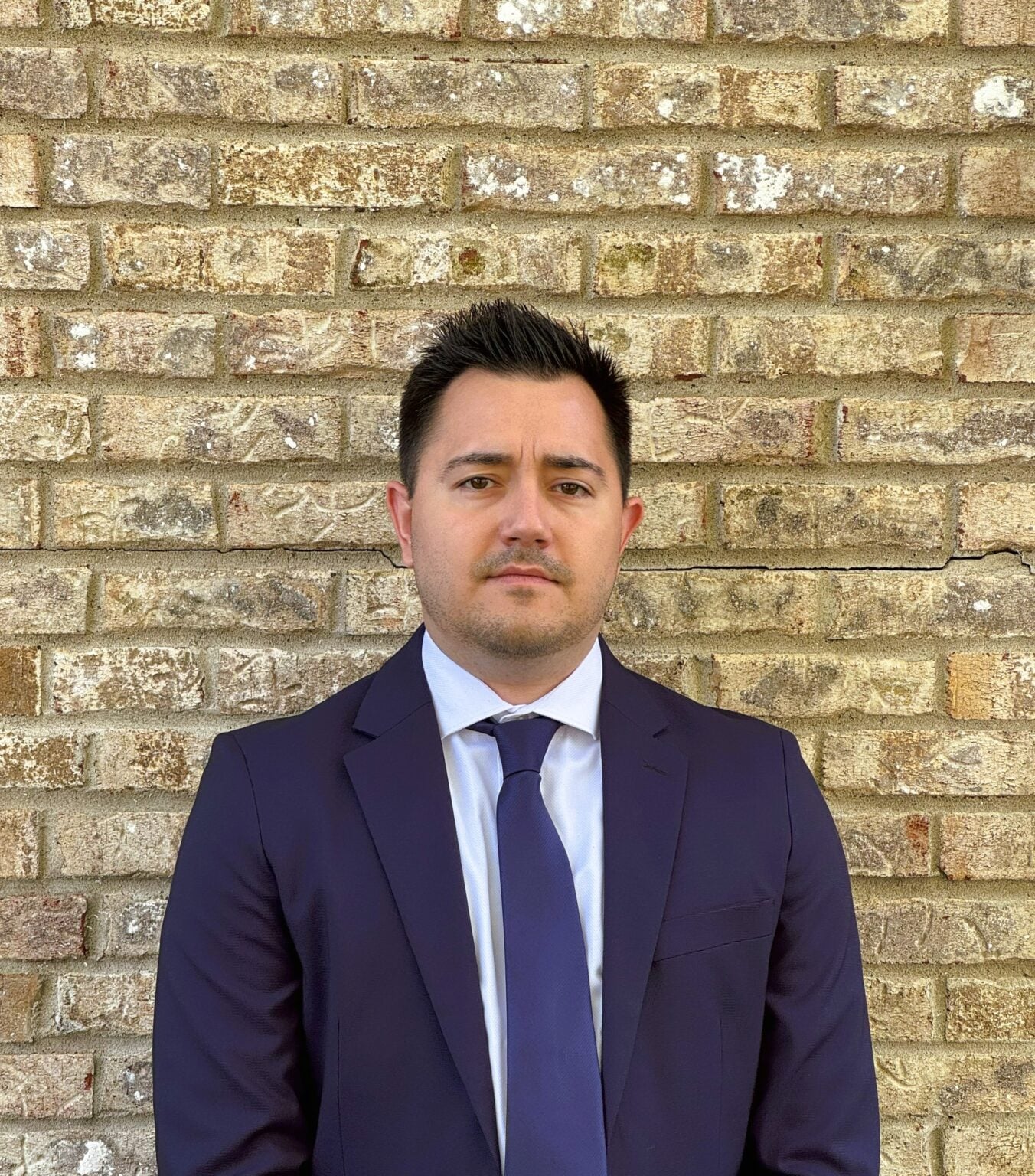
Gabe Andrade
Minnesota Personal Injury Attorney
Gabriel E. Andrade leads Andrade Law with a focus on accountability, careful case-building, and client-first communication. His approach is grounded in the reality that injuries disrupt everything—health, income, family life, and peace of mind—and the legal process should help, not add confusion.
Gabe represents Minnesota survivors of sexual assault and abuse in civil claims, including negligence claims against the facilities and employers responsible for supervising staff.
If you’re navigating a serious injury, Gabe and the team can help you understand your options and what a fair path forward could look like.
Professional Associations






Talk with us — free consultation
This post discusses Miller v. The Emily Program, P.C., No. A26-0235 (Minn. Ct. App. Aug. 31, 2026) (nonprecedential). It is general information, not legal advice, and does not create an attorney-client relationship.