MN Injury Case Watch
Did the University of Minnesota's Concussion Plan Create a Legal Duty? A Divided Court Rejects the Campions' Section 323 Theory
When a school or sports organization adopts a written safety policy — a concussion protocol, a supervision plan, a security procedure — injured people often assume the policy itself creates a legal obligation to follow it. A recent, closely divided Minnesota Court of Appeals decision shows that Minnesota law does not automatically work that way, and that the outcome can depend heavily on how a plaintiff frames the legal theory on appeal.
The Facts
What happened
Josh Campion enrolled at the University of Minnesota in January 2011 and played football there as an offensive lineman through October 2015. Between August 2011 and August 2015, he was diagnosed with three separate concussions.
The University, as a member of the NCAA and the Big Ten Conference, had a Concussion Management Plan (CMP) in effect in 2015. The CMP required that a student-athlete who shows “any signs, symptoms, or behaviors consistent with a concussion” be removed from play and evaluated by a medical staff member, and that a player with a confirmed concussion be held out for the rest of that day.
On October 3, 2015, Josh played in a game at Northwestern University and took a hit to the head late in the first half. At halftime, according to sworn statements in the record, he had vision problems and a headache, was “moaning and groaning,” and had tears on his face. A teammate testified that he mouthed to coach Matt Limegrover that Josh had a concussion. Limegrover and athletic trainer Chris Ashton spoke with Josh in the locker room; neither could later recall the conversation. The teammate testified that he overheard Limegrover ask Josh whether he could return, and Josh said he was “fine to go.” Josh played the second half and sustained another head collision. The next day, a doctor diagnosed his fourth concussion.
Josh stopped playing football after that diagnosis and married Ciera in June 2016. Medical evidence cited in Judge Bratvold's partial dissent indicated that Josh later met the criteria for early-onset dementia due to a progressive neurodegenerative disorder.
Josh and Ciera Campion sued the NCAA, the Big Ten, and the University in Hennepin County District Court, asserting claims for breach of fiduciary duty, negligence, and — for Ciera — loss of consortium. The University also moved to exclude opinions from the Campions' experts, including Dr. Peter Seidenberg's opinion that the University violated the CMP during the Northwestern game. The district court excluded the challenged opinions, granted summary judgment to all three respondents, and denied the Campions' motion for partial summary judgment on duty. The Campions appealed.
The Decision
What the court held
The Minnesota Court of Appeals affirmed summary judgment for all three respondents, in an opinion authored by Judge Reyes. See Campion v. National Collegiate Athletics Association, No. A25-1838 (Minn. Ct. App. July 27, 2026). This opinion is nonprecedential. It is not binding authority, although it may be cited for persuasive value as permitted by Minn. R. Civ. App. P. 136.01, subd. 1(c).
The court reviewed summary judgment de novo, viewing the evidence in the light most favorable to the Campions. The majority resolved Josh's negligence claim on the threshold question of duty, which is generally a question of law. It therefore did not reach whether the University violated the CMP, whether any violation caused Josh's injuries, or whether primary assumption of the risk would independently bar the negligence claim.
Judge Bratvold concurred in the dismissal of all claims against the NCAA and the Big Ten, and in the dismissal of the fiduciary-duty claim against the University, but dissented from the dismissal of Josh's negligence claim and Ciera's loss-of-consortium claim against the University — concluding that genuine fact disputes should have sent those two claims to a jury.
The breach-of-fiduciary-duty claim
The panel unanimously affirmed dismissal of this claim. Minnesota recognizes fiduciary relationships that exist “per se” and relationships where the circumstances create a “de facto” fiduciary obligation — one person trusting and confiding in another with superior knowledge and authority. Josh did not argue a per se fiduciary relationship; he asserted a de facto one. The district court found that Josh did not reasonably place his trust and confidence in the University, and that there was no evidence he placed trust or confidence in the NCAA or the Big Ten. The majority also concluded that Josh had not cited binding authority or adequately developed his claimed “fiduciary duty of health and safety” in the collegiate-athletics context, and so declined to consider those inadequately supported assertions.
The negligence claim
This was the central issue, and it turned entirely on Restatement (Second) of Torts § 323 — sometimes called the Good Samaritan rule. That section can impose liability on someone who voluntarily undertakes to provide a service they should recognize as necessary to protect another person, if their failure to use reasonable care in performing that undertaking either increases the risk of harm or causes harm because the other person relied on it.
Josh argued that by adopting the CMP, the University voluntarily undertook a duty to protect his health and safety, and that failing to follow the CMP during the Northwestern game breached that duty. He relied solely on section 323 and explicitly told the court that a related doctrine, section 324A (which covers undertakings to protect a third person), was “not relevant” to his case.
The majority held that no Minnesota case recognizes a general duty to “protect” a party's health and safety under section 323, in any context — let alone college athletics. The court leaned heavily on Funchess v. Cecil Newman Corp., a Minnesota Supreme Court case holding that a landlord who installed a security door did not thereby take on a duty to maintain it against harm from third-party criminals. The Funchess court reasoned that finding such a duty would discourage landlords from improving security in the first place; the majority applied that same policy concern here, reasoning that treating the CMP's adoption as creating a section 323 duty could discourage universities from adopting player-safety measures. The majority also concluded that Josh's Minnesota authorities did not establish the duty he asserted: two of the principal cases, Walsh and Ironwood Springs, were decided under section 324A, a theory Josh expressly disclaimed, and Isler rested on the land-inspection duties of a possessor of land, although it also referenced section 323.
The majority further observed that Josh appeared to invoke both routes identified in section 323 — an increased risk of harm and reliance on the undertaking — but did not adequately support either with relevant binding authority. As to reliance, the court specifically noted that Josh did not argue he had forgone other means of protecting himself because of any particular action or representation by the respondents. The majority also emphasized that Josh had no direct contact with the NCAA or the Big Ten, making his asserted undertaking relationship with those entities even more attenuated than his relationship with the University.
The loss-of-consortium claim
Because Ciera's claim is derivative of Josh's, the majority held that dismissal of Josh's underlying claims required dismissal of hers as well.
The excluded expert testimony
The district court had excluded Dr. Seidenberg's opinion that the University violated the CMP during the Northwestern game, on the ground that it lacked factual foundation. The majority did not reach whether that exclusion was proper, because expert opinions concerning breach or causation could not establish a legal duty that the majority concluded did not exist under the theory presented.
The dissent
Judge Bratvold, concurring in part and dissenting in part, would have reversed on three points as to the University only. First, she would have held that the district court abused its discretion by excluding Dr. Seidenberg's testimony, reasoning that his opinion was supported by sworn statements in the record — including a teammate's account of Josh's visible distress — and that any weaknesses in his factual basis went to weight, not admissibility. Second, she concluded that adopting the CMP could itself be the kind of “undertaking” that creates a section 323 duty, since the CMP was an express commitment to provide specific medical services rather than a general aspirational statement, and that a jury should decide whether the University assumed that duty and whether it enlarged Josh's risk of harm. She also rejected the majority's concern that imposing a duty would discourage voluntary safety measures, reasoning that the NCAA required the University to maintain the CMP. Third, she would have allowed Ciera to pursue a latent-injury theory recognized in some other states for spouses who marry after an injury but before its full extent becomes known.
Open Questions
What the court did not decide
Because the majority resolved the negligence claim on the absence of a duty under the theory presented, it did not decide whether the University actually violated its own CMP during the Northwestern game, whether primary assumption of the risk (or the “enlargement of risk” exception to it) would have barred the claim had a duty existed, or whether the district court properly excluded the challenged expert testimony. Two alternative duty theories also went unaddressed because Josh did not present them: section 324A, which he expressly characterized as irrelevant, and a special-relationship theory under Restatement § 314A, which he likewise said was not relevant to his case.
Practical Takeaways
What this means for Minnesota injury claims
Practical points that arise directly from this opinion:
- Duty can dispose of a negligence claim before breach and causation are ever reached. The majority resolved Josh's negligence claim as a matter of law on duty, and therefore did not decide whether the CMP was triggered, whether the University violated it, or whether any violation caused his later condition.
- Campion does not establish that a safety protocol can never create a legal duty. The nonprecedential majority held that, under the section 323 theory presented, the CMP did not create the general duty to protect health and safety that the Campions asserted. The court did not decide other duty theories that were not presented.
- Choice of legal theory matters. The Campions relied solely on section 323 and disclaimed section 324A, even though some of their own supporting cases were decided under section 324A. That framing decision shaped what the court could consider.
- Judge Bratvold's partial dissent is a detailed competing analysis, but it is not the court's holding. The dissent identified record evidence and authorities she believed created jury questions on the University's undertaking, compliance with the CMP, enlargement of risk, and Ciera's claim. Because the opinion is nonprecedential, majority and dissent alike may be cited for persuasive value but are not binding.
- The latent-injury question remains unresolved in Minnesota appellate caselaw. Judge Bratvold observed that Minnesota appellate courts have not decided whether a spouse who marries after an injury, but before a latent condition becomes known, may recover loss-of-consortium damages. The majority did not reach the issue, affirming dismissal of Ciera's claim solely as derivative.
Related reading from Andrade Law:
- how long-term cognitive and neurological harm is documented and proven in an injury claim
- what makes an injury claim catastrophic, and how lifetime care needs are established
- our case note on Schafer v. Oakwood Community Church, where foreseeability decided a youth-program injury claim
- our case note on Miller v. The Emily Program, where a defendant’s Minnesota headquarters, standing alone, did not keep an injury claim in Minnesota courts
Case Information
Case information
- Case
- Josh Campion, et al., Appellants, vs. National Collegiate Athletics Association, Respondent, The Big Ten Conference, Inc., Respondent, The University of Minnesota, Respondent
- Docket
- A25-1838
- Court
- Minnesota Court of Appeals
- District court of origin
- Hennepin County District Court (File No. 27-CV-21-10480)
- Filed
- July 27, 2026
- Disposition
- Affirmed (summary judgment for all respondents upheld, 2–1, with a partial dissent as to the University)
- Precedential status
- Nonprecedential (not binding under Minn. R. Civ. App. P. 136.01, subd. 1(c))
- Authoring judge
- Judge Reyes, presiding (Larkin, Judge; Bratvold, Judge, concurring in part and dissenting in part)
- Official opinion (mncourts.gov)
- OPa251838-072726.pdf
- Mirror (mn.gov Law Library)
- OPa251838-072726.pdf
Your Attorney
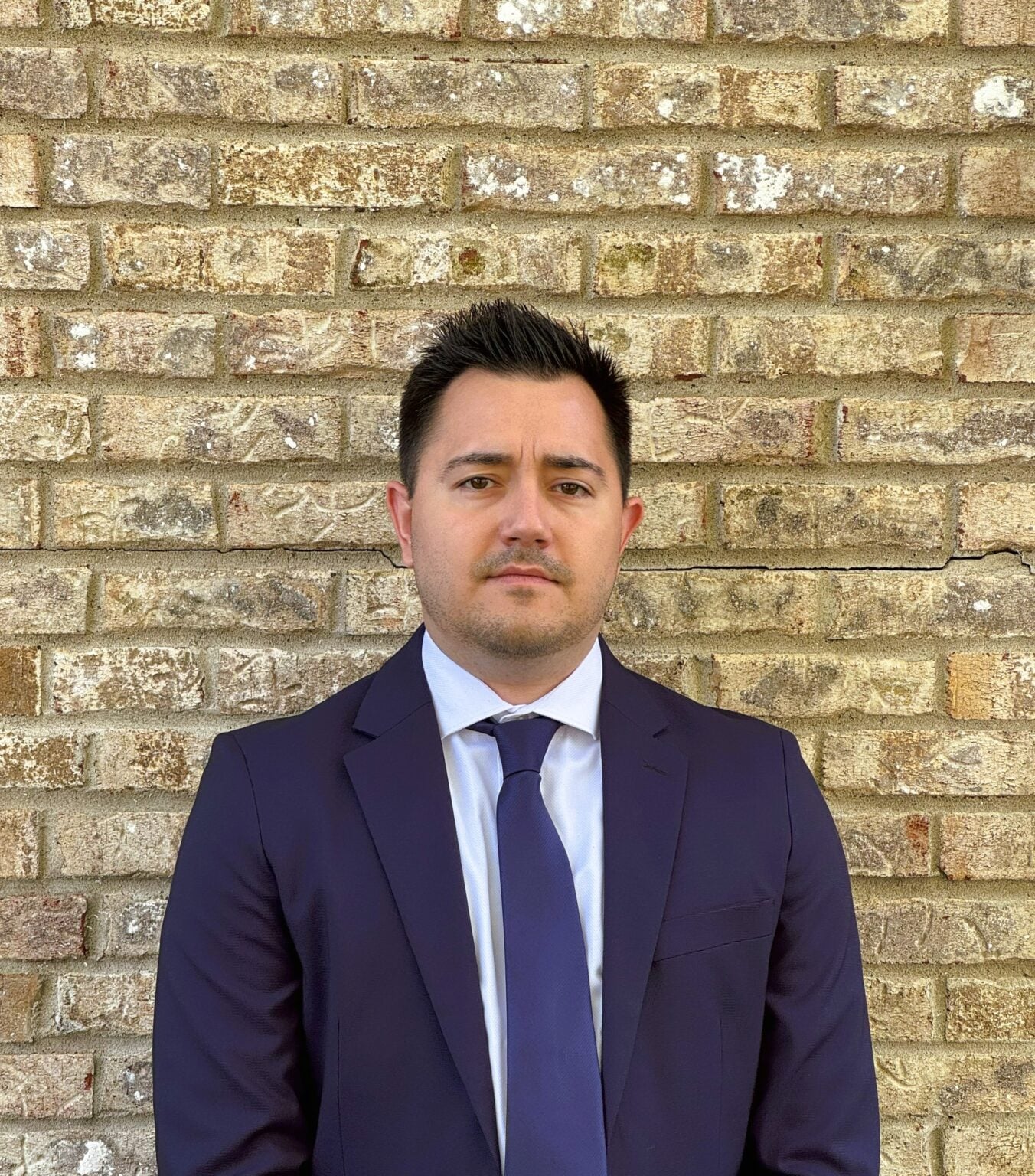
Gabe Andrade
Minnesota Personal Injury Attorney
Gabriel E. Andrade leads Andrade Law with a focus on accountability, careful case-building, and client-first communication. His approach is grounded in the reality that injuries disrupt everything—health, income, family life, and peace of mind—and the legal process should help, not add confusion.
Gabe represents injured Minnesotans in brain-injury and catastrophic-injury claims, where the long-term medical picture takes time to come into focus.
If you’re navigating a serious injury, Gabe and the team can help you understand your options and what a fair path forward could look like.
Professional Associations






Talk with us — free consultation
This post discusses Campion v. National Collegiate Athletics Association, No. A25-1838 (Minn. Ct. App. July 27, 2026) (nonprecedential). It is general information, not legal advice, and does not create an attorney-client relationship.