
Abbott Northwestern Hospital Visitor & Records Guide
After a crash or a fall in south Minneapolis, treatment often runs through Abbott Northwestern at 800 E 28th St, and so do the spine, brain, and rehabilitation records an injury claim will depend on. Here’s how to get oriented, support your patient, and protect the paper trail.
Free Consultation: No fees unless we win your case. Past results do not guarantee future outcomes. This information is for educational purposes only.
South Minneapolis Medical Campus
Why Injury Cases Run Through Abbott Northwestern
Abbott Northwestern Hospital sits at 800 E 28th St in south Minneapolis, in Hennepin County (S2 cell 52b332ac). The hospital comes up in Google Maps searches for trauma centers and for orthopedic hospitals, and Google Maps clusters related listings around it: the Allina Health Brain and Spine Institute about 600 feet away, the Courage Kenny Rehabilitation Institute about 700 feet away, Abbott Northwestern’s Joint Replacement Center about 330 feet away, and Children’s Minnesota about 850 feet away. In a straight line the hospital is about 1.9 miles from our Minneapolis office at 10 S 5th St, Suite 800, about a third of a mile from the Midtown Greenway at Nicollet Avenue, about a mile from Franklin Avenue and I-35W, and about 1.2 miles from E Lake St and Hiawatha Ave. That Greenway crossing is where a rider arriving at trail speed meets a driver turning across the path, the pattern I describe on the Lake Street corridor page.
That cluster matters for an injury case. A crash victim can be treated for a spinal or head injury, evaluated at the institute, and start rehabilitation within a few hundred feet of where the ambulance stopped. Each of those buildings keeps its own file, and the whole arc of the injury is written across them.
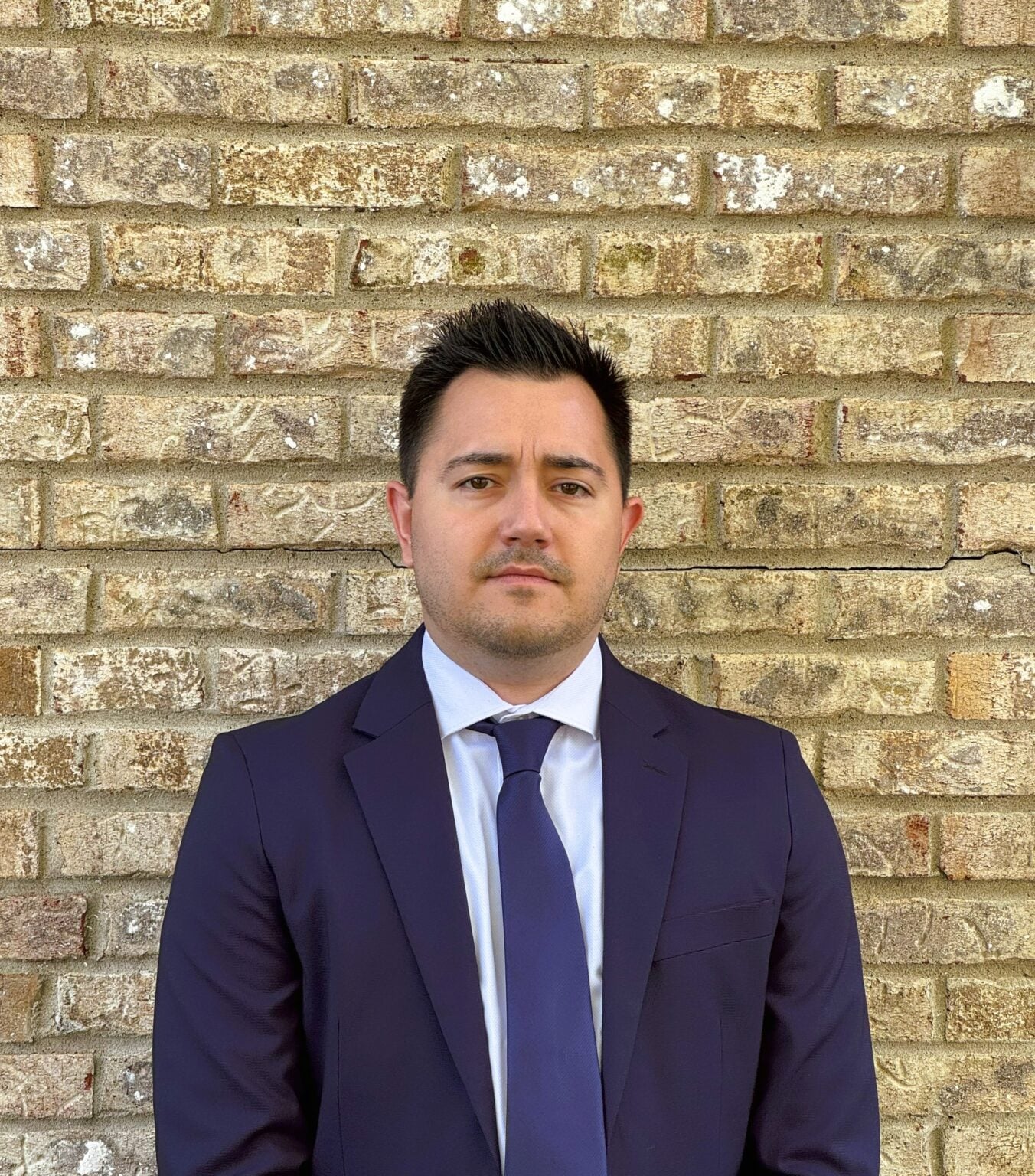
I’m Gabe Andrade. Andrade Law is a personal injury law firm in Saint Paul, Minnesota, and I also meet clients at our Minneapolis office. When a family calls from this campus, my first questions are about the patient. My second are about which building they’re in.
Finding Your Way
Getting In: Entrances and Parking
I don’t publish entrance maps or parking instructions for Abbott Northwestern. The hospital sets them, and they change without notice. Check the hospital’s own directions page before you drive in, and confirm with whoever called you which building the patient is in. The hospital, the Brain and Spine Institute, the rehabilitation institute, and Children’s Minnesota are separate Google Maps listings within about 850 feet of each other, and arriving at the wrong door costs time you don’t have.
Once inside, start at the information desk, give the patient’s full legal name, and write down the unit and room as soon as staff can share it. If you arrived behind an ambulance, you won’t know the room yet. Ask, wait, and ask again.
Supporting a Patient
Visiting Basics
Visiting policies depend on the unit and can change, so confirm the current rules with the hospital before you arrive. Intensive-care and neurological units usually run tighter rules than general floors. Bring photo ID, travel light, and expect to be asked who you are to the patient.
Keep a notebook from day one. Spine and brain injuries produce long treatment arcs, and the names of surgeons, therapists, and case managers pile up quickly. Write down who said what, and when. If you can’t get information or don’t understand a decision, ask for the hospital’s patient relations office. For the medical care itself, ask staff about interpreter services; for the legal side, we work in English and Spanish directly.
If your family has done this before on the other side of the Twin Cities, our Regions Hospital ER navigation and patient support guide and our St. John's Hospital visitor and medical records guide follow the same routine. When the patient is a child, our Gillette Children's specialty care visitor guide covers what changes.
The Paper Trail
Medical Records and Your Injury Claim
A serious orthopedic or neurological injury generates records in layers. The hospital file holds the triage note, imaging and the radiologist’s reads, operative reports, nursing and medication records, the discharge summary, and an itemized bill. The specialty clinic adds consultation notes and follow-up imaging. Rehabilitation adds therapy notes and functional assessments that describe, visit by visit, what the patient can and cannot do. The ambulance service keeps its own run report. For a spine or brain injury, the rehabilitation file is often the most important of all, because it’s where permanence gets documented.
You have the right to all of it. Under Minn. Stat. §§ 144.292–.293, Minnesota’s patient-access provisions, you can inspect your records and get copies, and a person you authorize in writing can request them for you. The statute puts a 30-day clock on the provider. Because the hospital, the institute, and the rehabilitation program are separate listings, ask each facility’s release-of-information desk whether one request covers the others, and request the complete record rather than a summary.
Timing matters. No-fault medical benefits under Minn. Stat. § 65B.44 pay the first bills regardless of fault, and Minn. Stat. § 65B.55 asks for notice to your no-fault insurer within six months of the crash. That deadline is soft, since the insurer must show it was prejudiced by a late notice, but I don’t let clients test it. With your signed authorization, we request the records ourselves as they’re created, not months later.
The Legal Side
Why This Matters After a Crash
The state’s Crash Facts report for 2023 counts 4,744 injury crashes in Hennepin County that year. The ones that end on this campus tend to be the serious ones, and serious injuries are proved in a particular way. Minnesota’s no-fault tort threshold, Minn. Stat. § 65B.51, requires proof like a permanent injury or medical expenses above a set level before an injured person can step outside no-fault and sue the at-fault driver. For a spinal or brain injury, permanence is the question, and the answer lives in the surgical reports and the rehabilitation notes written here.
Fault is a separate file. The crash report comes from the law enforcement agency that investigated, not from the hospital, and Minn. Stat. § 169.09 lists who may obtain it, including injured people and their attorneys. A complete medical record does not decide a claim by itself, but no serious claim stands without one.
If you want to understand what these cases have to prove before you talk to an adjuster, start with what spinal cord injury and paralysis claims have to document about permanence and future care, then bring your questions to a free consultation. Our Minneapolis office is about 1.9 miles from the hospital, and we meet by phone or video while a family is still at a bedside.
Common Questions
Frequently Asked Questions
Can I get my own medical records from Abbott Northwestern? +
Yes. Under Minn. Stat. §§ 144.292–.293 you can inspect and copy your records, and someone you authorize in writing can request them for you. Ask the release-of-information desk for the complete record and the itemized bill, and ask whether the specialty clinic and rehabilitation records need separate requests.
How long do I have to file an injury lawsuit in Minnesota? +
Most negligence-based injury claims run six years under Minn. Stat. § 541.05. That statute is a catch-all, not a personal injury deadline, and some claims carry shorter periods; claims against a city or county also have separate notice requirements. Talk to an attorney early.
Do rehabilitation records matter to an injury claim? +
Often more than anything else. Therapy notes and functional assessments document what a person can and cannot do over months, which is how permanence and future care needs are shown. Keep every appointment, and keep your own notes between them.
What happens to the bill if the other driver caused the crash? +
Minnesota is a no-fault state. Your own auto policy’s no-fault benefits under Minn. Stat. § 65B.44 pay medical expenses first, regardless of who caused the crash. Fault is sorted out separately, on the strength of the records.
Important Information: Andrade Law is not affiliated with Abbott Northwestern Hospital or Allina Health. Entrances, parking, visiting policies, and records procedures are set by the hospital and can change without notice — verify current details with the hospital before you visit. Listings and distances come from Google Maps as of September 13, 2026; distances are straight-line, not driving routes. Nothing on this page is medical advice.
This page is general information and is not legal advice. Contacting Andrade Law does not create an attorney-client relationship. Representation begins only after Andrade Law and the client sign a written engagement agreement. Every case depends on its own facts, and no result is guaranteed.
Your Attorney
Gabe Andrade
Minnesota Personal Injury Attorney
Gabriel E. Andrade brings a personal commitment to every case. As a dedicated personal injury attorney serving the Greater Twin Cities, Gabe combines legal expertise with genuine compassion for clients facing difficult times.
Professional Associations