
Hennepin County Government Center Parking & Check-In Guide
Most injury cases resolve without a trial. When yours does need a hearing in downtown Minneapolis, the day goes better if you already know where the building is, what to bring, and what a hearing actually decides.
Free Consultation: No fees unless we win your case. Past results do not guarantee future outcomes. This information is for educational purposes only.
Downtown Minneapolis Civic Core
What the Government Center Is
The Hennepin County Government Center stands at 300 S 6th St in downtown Minneapolis, in Hennepin County (S2 cell 52b3329c). Google Maps lists the Hennepin County District Court, the District Court Civil Office, and the Violations Bureau at this address. In a straight line it is about 0.4 miles from our Minneapolis office at 10 S 5th St, Suite 800, about 700 feet from the Hennepin County Sheriff’s Office listing, about a third of a mile from Nicollet Mall, a third of a mile from HCMC, and about half a mile from U.S. Bank Stadium. It also stands in the middle of the district where a courthouse, a hospital, a stadium, and a pedestrian mall share a few blocks, which is where many of the injuries I handle downtown begin.
Your hearing notice controls everything on this page. It names the building, the courtroom, the time, and whether you appear in person or by video. If it names the Government Center, read on. If it names a different building, this page will only get you lost.
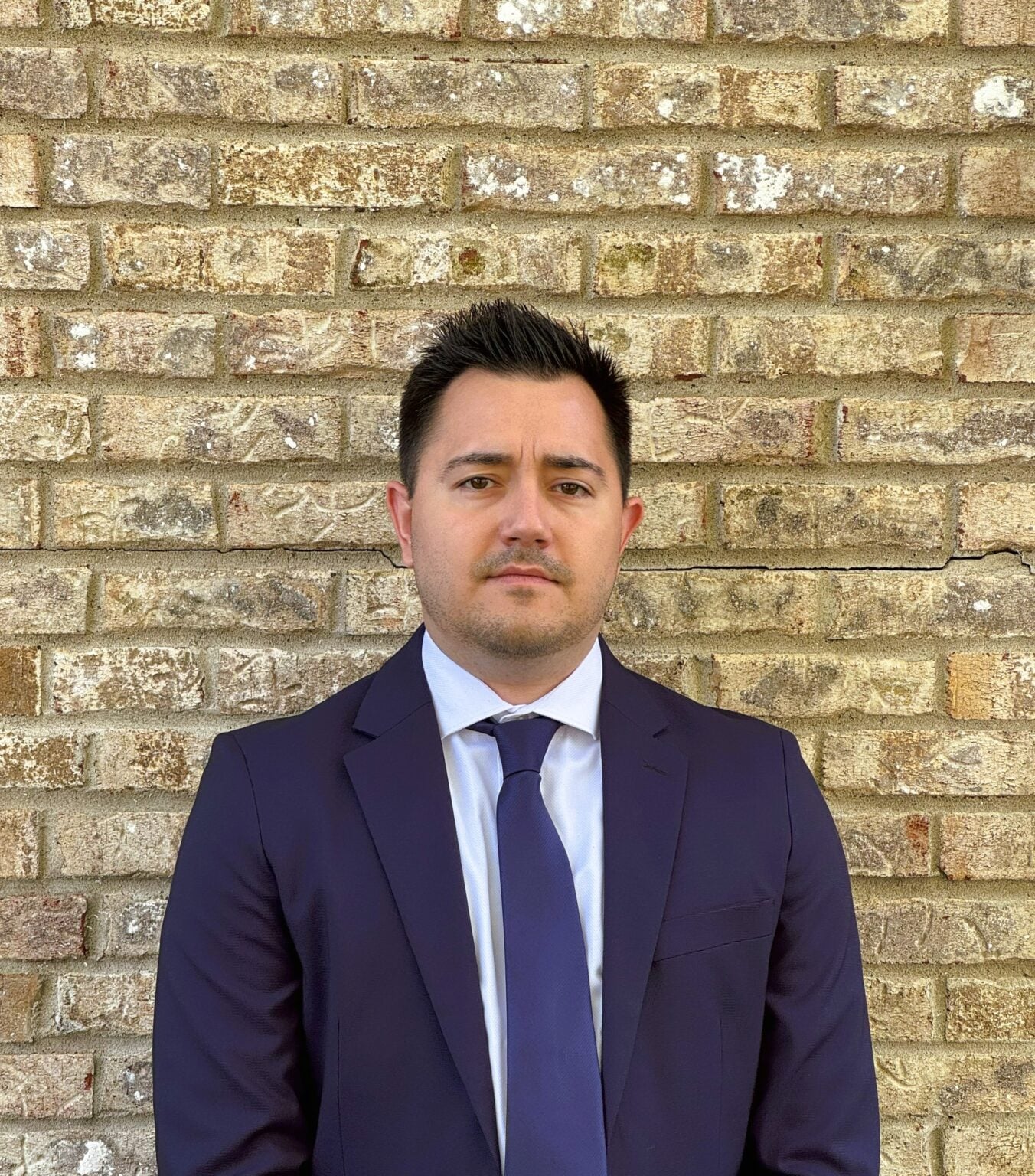
I’m Gabe Andrade. Andrade Law is a personal injury law firm in Saint Paul, Minnesota, with an office in Minneapolis. I wrote this page because the questions clients ask before a Hennepin County hearing are never about the law. They’re about parking, doors, and what to carry.
Getting There
Parking and Entrances
I don’t publish ramp names, parking prices, or entrance instructions for the Government Center. The county sets them, they change, and a stale instruction on hearing day is worse than none. Check the county’s own building page the night before for the current public entrance and any closures, and if you’re taking transit, check Metro Transit for the stop closest to S 6th St.
Two things hold in every downtown: a court calendar doesn’t care about your meter, so budget for the full morning, and the walk from wherever you park takes longer than you think when you’re nervous. Leave early. Arriving calm is worth more than arriving exactly on time.
Hearing Day
Hearing-Day Basics
Assume the same things any public courthouse asks. Bring government-issued photo ID. Plan to be inside the building well before your hearing time, because I won’t describe the entrance line here and you shouldn’t bet on it being short. Leave pocket knives, tools, and anything you wouldn’t carry onto a plane at home or in your trunk. Silence your phone before you reach the courtroom door.
- Government-issued photo ID
- Your hearing notice with the case number and courtroom
- Any documents your attorney asked for — nothing extra
- A charged phone with your attorney’s number saved
In most personal injury hearings, your attorney does the talking. Your job is to be present, on time, and reachable. Our Ramsey County Courthouse parking and check-in guide covers the same routine for the east side of the Twin Cities, and our Minnesota Judicial Center visitor and appellate court guide explains what changes if a case is appealed.
The Paper Trail
Court Records and Your Injury Claim
Once a lawsuit is filed, the court keeps a file: the complaint and the answer, the scheduling order, the motions each side brings and the orders that decide them, and eventually any judgment. Most of what proves an injury case never enters that file. Medical records, the crash report, photographs, and statements stay in the attorneys’ working files unless they’re attached to a motion or introduced at trial. You’re entitled to copies of what’s filed in your case, and I give clients every filing as it goes out.
The crash report is a different record with a different keeper. It comes from the law enforcement agency that investigated, not from the court, and Minn. Stat. § 169.09 lists who may obtain it, including injured people and their attorneys. Access to law enforcement data more broadly, including accident data, is governed by Minn. Stat. § 13.82. Google Maps lists the Hennepin County Sheriff’s Office about 700 feet from the Government Center, but which agency investigated depends on where the crash happened, and your request goes to that agency. Our St. Paul police crash report request guide shows what a request looks like at one department.
Timing runs on two clocks. Most negligence-based injury claims must be filed within six years under Minn. Stat. § 541.05, which is a catch-all rather than a personal injury deadline, and some claims run shorter. Claims against a city, county, or other government body carry their own notice requirements under Minn. Stat. § 466. If a government vehicle or a public sidewalk is part of your story, say so at the first meeting.
Context
How a Hearing Fits Your Injury Case
A hearing isn’t a verdict. Most are procedural: scheduling conferences, motions about what evidence comes in, settlement discussions the court supervises. Cases can resolve at any point along the way, and preparation is what moves them. What the court eventually weighs is fault. Under Minn. Stat. § 604.01, Minnesota’s comparative fault statute, an injured person recovers unless their share of the fault is greater than 50 percent; at exactly 50 percent you still recover, with the award reduced by your share. That argument is built from the crash report and the medical record long before anyone walks into this building.
If you want to see how that argument is assembled, read how auto accident litigation and collision claims move from demand letter to courtroom, then bring your questions to a free consultation. Our Minneapolis office is about 0.4 miles from the Government Center, and we meet by phone or video when travel is hard.
Common Questions
Frequently Asked Questions
Do I have to go to the Government Center for my injury case? +
Usually not. Most injury claims resolve without a lawsuit, and many hearings now happen by video. If you do need to appear in person, your hearing notice names the building, the courtroom, and the time.
How long do I have to file an injury lawsuit in Minnesota? +
Most negligence-based injury claims run six years under Minn. Stat. § 541.05, a catch-all statute rather than a personal injury deadline. Some claims run shorter, and claims against a government body carry separate notice requirements under Minn. Stat. § 466. Talk to an attorney early.
Can I pick up my crash report at the Government Center? +
I can’t confirm that, and I wouldn’t plan on it. Crash reports come from the law enforcement agency that investigated the crash, and Minn. Stat. § 169.09 lists who is eligible to receive one. Ask your attorney which agency holds yours.
What happens at a first hearing? +
Most first hearings are scheduling conferences. The court sets deadlines for exchanging evidence and picks dates for later steps. Your attorney speaks; you listen, take notes, and confirm you can make the dates.
Important Information: Andrade Law is not affiliated with Hennepin County or the Hennepin County District Court. Building hours, entrance procedures, parking, and filing procedures are set by the county and the courts and can change without notice — verify current details at mncourts.gov and the county’s website before your court date. Office listings and distances come from Google Maps as of September 13, 2026; distances are straight-line, not walking routes.
This page is general information and is not legal advice. Contacting Andrade Law does not create an attorney-client relationship. Representation begins only after Andrade Law and the client sign a written engagement agreement. Every case depends on its own facts, and no result is guaranteed.
Your Attorney
Gabe Andrade
Minnesota Personal Injury Attorney
Gabriel E. Andrade brings a personal commitment to every case. As a dedicated personal injury attorney serving the Greater Twin Cities, Gabe combines legal expertise with genuine compassion for clients facing difficult times.
Professional Associations